Verified Cedar Rapids Coating-Restoration Project
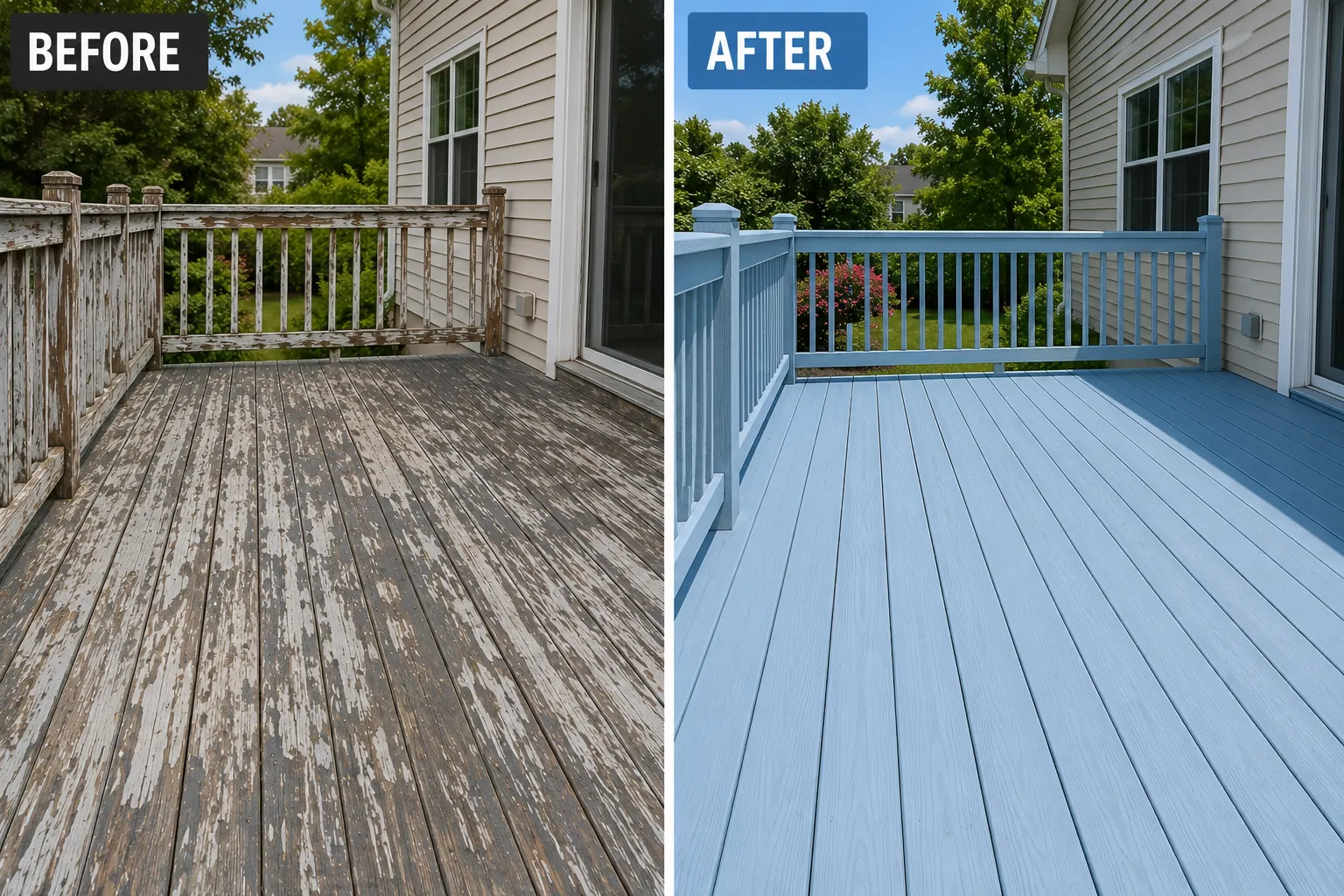
This project shows a deck where faded and uneven coating required a broader restoration plan rather than a simple maintenance wash.
Deck washing, failed-coating preparation, staining, and restoration for Palo outdoor wood affected by open exposure, storm seasons, moisture, and uneven wear.
After repeated sun, wind, rain, and seasonal weather, a deck may look faded without being ready for stain—or it may have loose coating and rough areas that need broader preparation. We compare the surface conditions before recommending a scope.
Dirt, faded color, water absorption, loose coating, rough fibers, and damaged boards point toward different next steps.
Open sections can fade and dry faster, while the house side, lower steps, or shaded boards remain darker and hold moisture longer. Wind-driven debris and seasonal storms can also leave buildup in corners and around railings.
The useful question is whether the change is mainly surface dirt, normal fading, unstable coating, or a broader condition that requires restoration. Structurally damaged boards should be repaired before finish work is treated as the solution.
These projects show the difference between broad coating failure and naturally weathered wood. Verified city names are shown only when the project location is confirmed.
This project shows a deck where faded and uneven coating required a broader restoration plan rather than a simple maintenance wash.
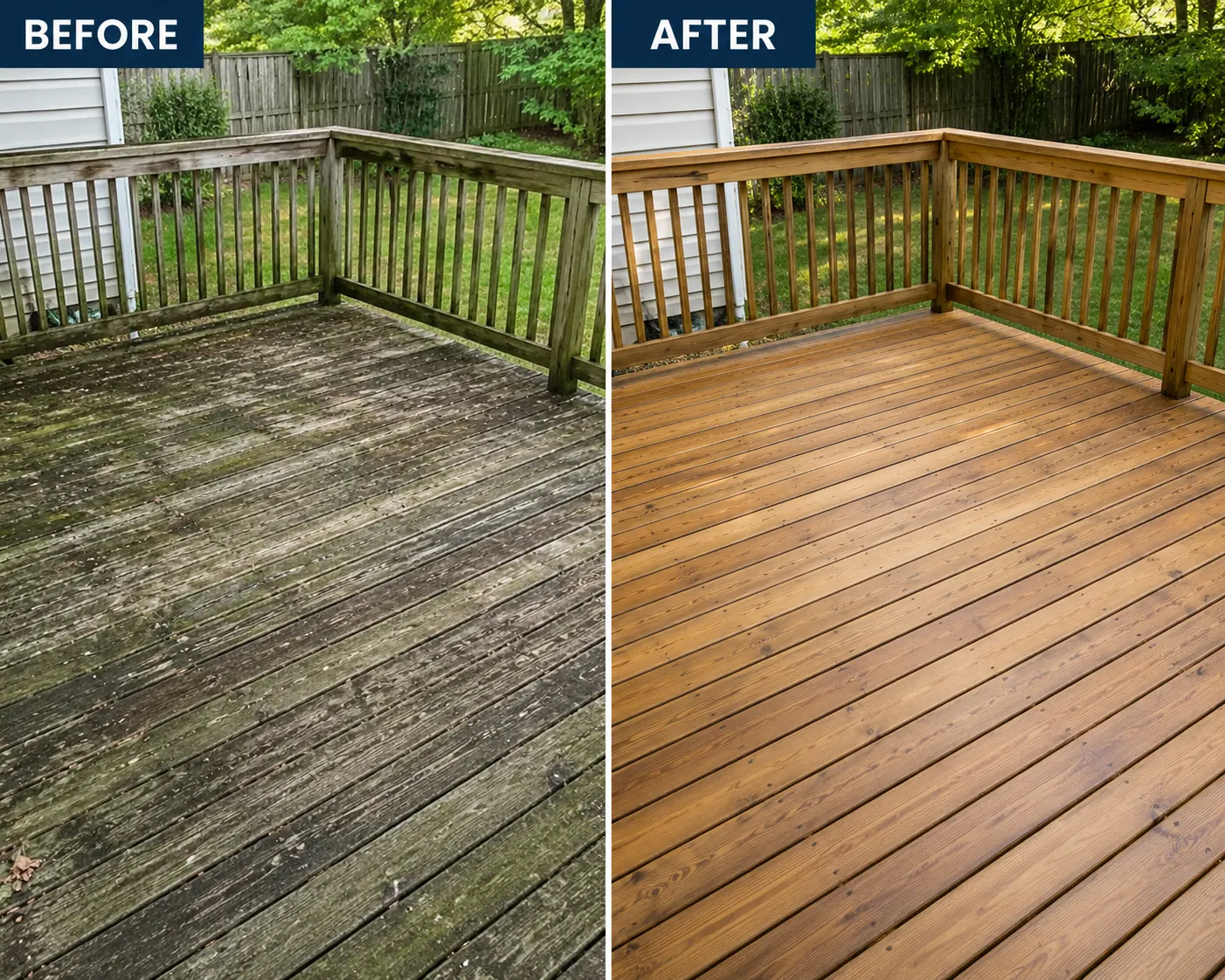
Gray and weathered wood can improve when cleaning, preparation, dry time, and the finish are matched to the actual surface condition.
The Cedar Rapids photo is identified by its verified location. The second project is described as I-380 Corridor proof because its exact city is not independently confirmed.
The evaluation separates surface cleaning, coating preparation, and repair concerns so finish work is not expected to solve the wrong problem.
We compare exposed, shaded, high-traffic, and coated areas instead of judging the deck from color alone.
Washing, scraping, or targeted sanding is recommended according to buildup, roughness, and coating stability.
Staining or restoration is recommended only after the surface and any needed repairs can support it.
The deck may need routine cleaning, failed-coating preparation, or a more complete restoration plan depending on what the inspection finds.
For dirt, pollen, organic buildup, and gray surface material when the deck mainly needs cleaning before another decision.
Explore deck washing →For loose, flaking, or patchy coating that needs stabilization before another finish is considered.
Review peeling-stain prep →For widespread weathering, roughness, coating failure, and multiple surfaces requiring coordinated work.
Explore deck restoration →Cleaning and staining can improve sound exterior wood, but they do not repair rot, loose framing, or structurally unsound boards. When repair is needed, that should be addressed before the finishing scope is finalized.
Palo is served alongside Cedar Rapids and nearby communities in Linn County. These pages provide additional verified projects and related condition guidance.
Call, text photos, or open the estimate form. We will review the deck condition before recommending a service.
No. The decision should be based on coating stability, water absorption, buildup, roughness, and the condition of the wood rather than the calendar alone.
Washing can remove dirt, organic buildup, and some loose weathered material. Deep discoloration, rough fibers, or coating failure may require additional preparation or restoration.
The wood needs appropriate dry time and suitable moisture conditions before stain or sealer is applied. Shaded and lower areas may dry more slowly than exposed boards.
Yes. We can review those surfaces during the same estimate while keeping their preparation and finish requirements separate from the deck.
Request an estimate or text photos. We will help distinguish cleaning, coating preparation, repair concerns, and restoration before recommending a finish.