
Flaking or peeling stain
Loose or failing coating needs to be addressed before a new finish is applied.
Prep failed stain before restaining
Peeling deck stain usually means the old coating is failing. The right fix starts with honest prep, not another coat over the problem.
Peeling deck stain is more than a cosmetic issue. It can point to poor prep from a previous job, trapped moisture, old product buildup, dirty wood, or years of Iowa sun, rain, snow, humidity, and freeze-thaw cycles. I380 Deck Wash & Stain helps homeowners figure out what the deck actually needs before more stain is applied. Some decks need washing and light prep. Some need scraping, sanding, and restoration work. Others may need repair guidance before finishing. Our goal is simple: give you an honest recommendation before you spend money on the wrong fix.
Best for: Previously coated decks with peeling, flaking, patchy buildup, rough coating edges, or failed stain that must be stabilized before another finish is considered.
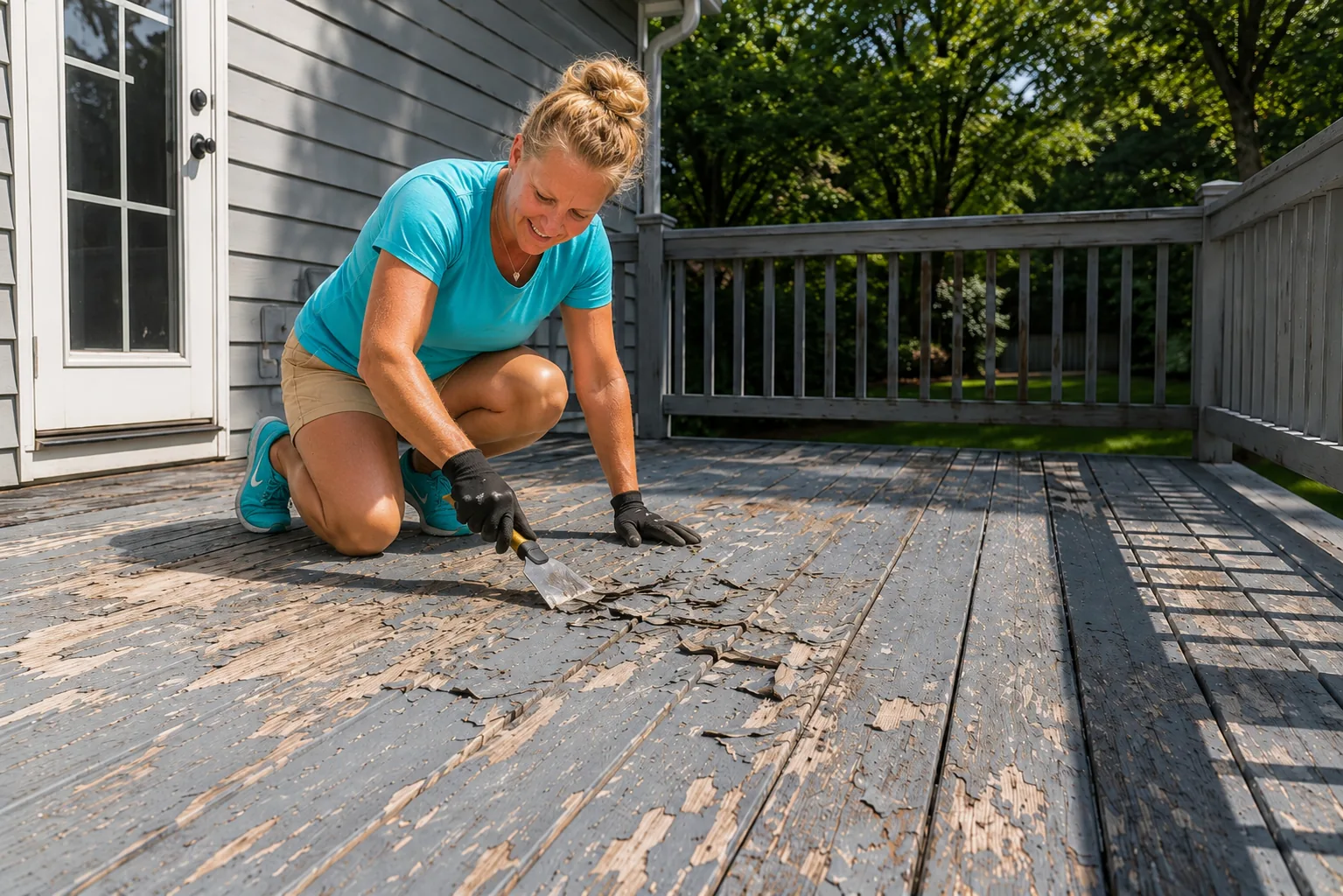
Most peeling deck projects start with a visible problem. The key is figuring out whether the issue is surface coating failure, moisture, poor prep, product buildup, or deeper wood damage.
Loose or failing coating needs to be addressed before a new finish is applied.
Uneven old stain can make the next finish look uneven unless prep is planned correctly.
Failure can happen from poor prep, moisture, product mismatch, coating buildup, or staining over contamination.
Edges, corners, top rails, stairs, and high-touch areas often peel differently than flat deck boards.
That is the expensive mistake this service helps homeowners avoid before paying for another finish.
Many older decks can be improved if the boards are still solid, but expectations need to be honest.
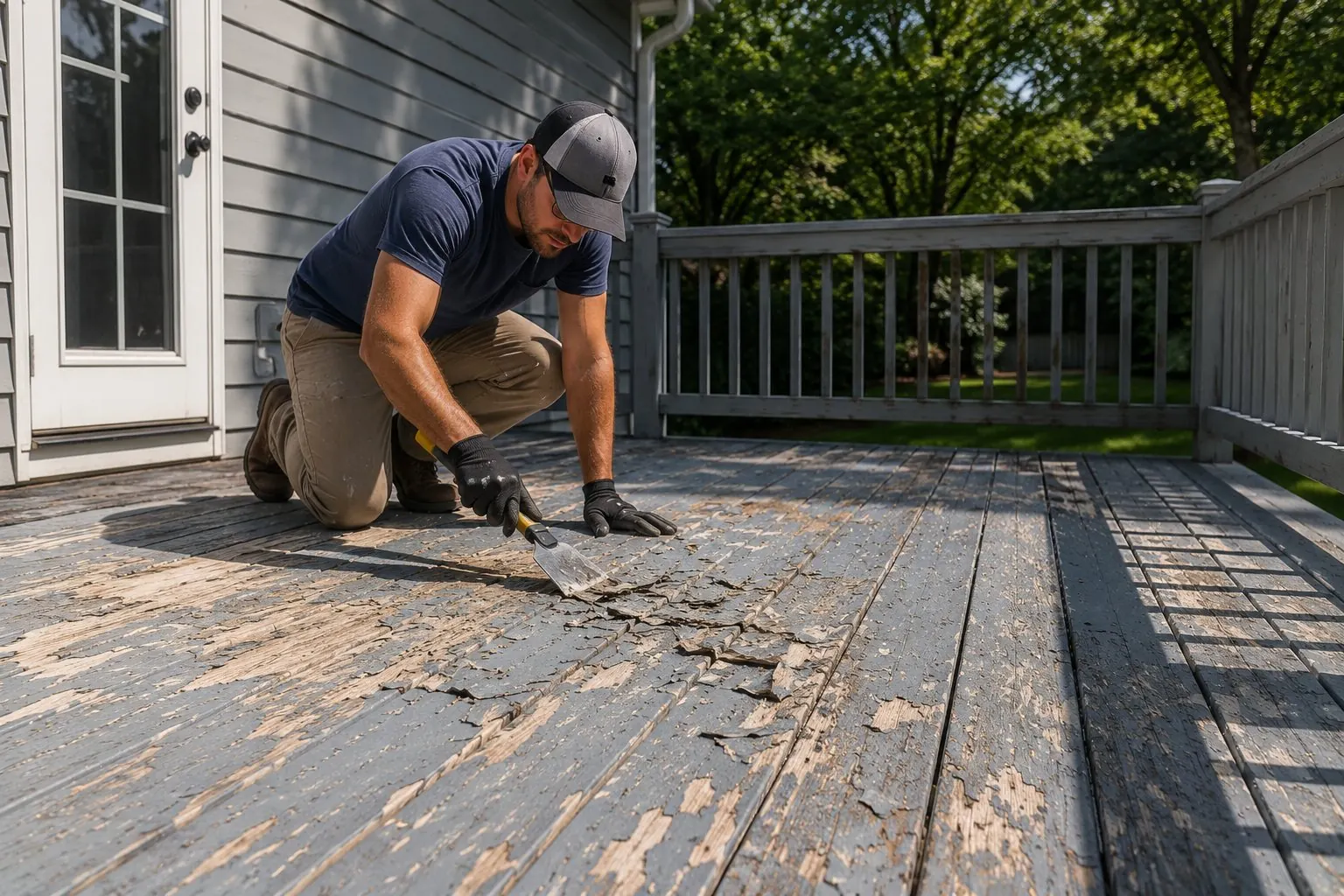
New stain needs a stable surface to bond to. If loose stain is still on the deck, the new finish may stick to the failing coating instead of the wood. When the old coating continues to peel, the new stain can come off with it. That is why prep matters. A better finish starts before the can of stain is ever opened.
Every deck is different. We look at the current coating, wood condition, railings, steps, traffic areas, and customer expectations before recommending the next step.
We look at peeling areas, old coating buildup, railings, steps, corners, moisture exposure, and the history of the previous finish.
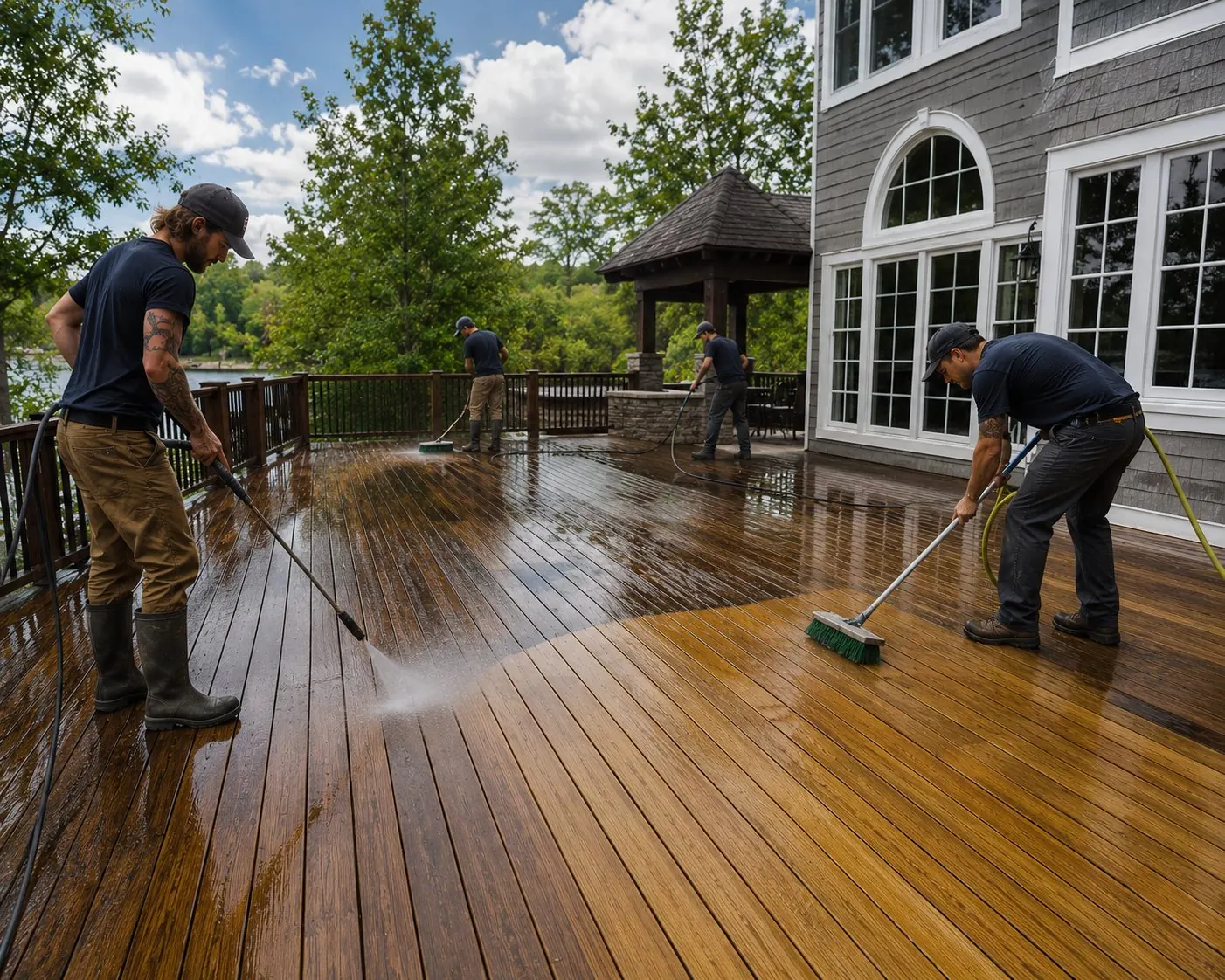
The deck may need washing, scraping, light sanding, drying time, or broader restoration before any new stain is considered.
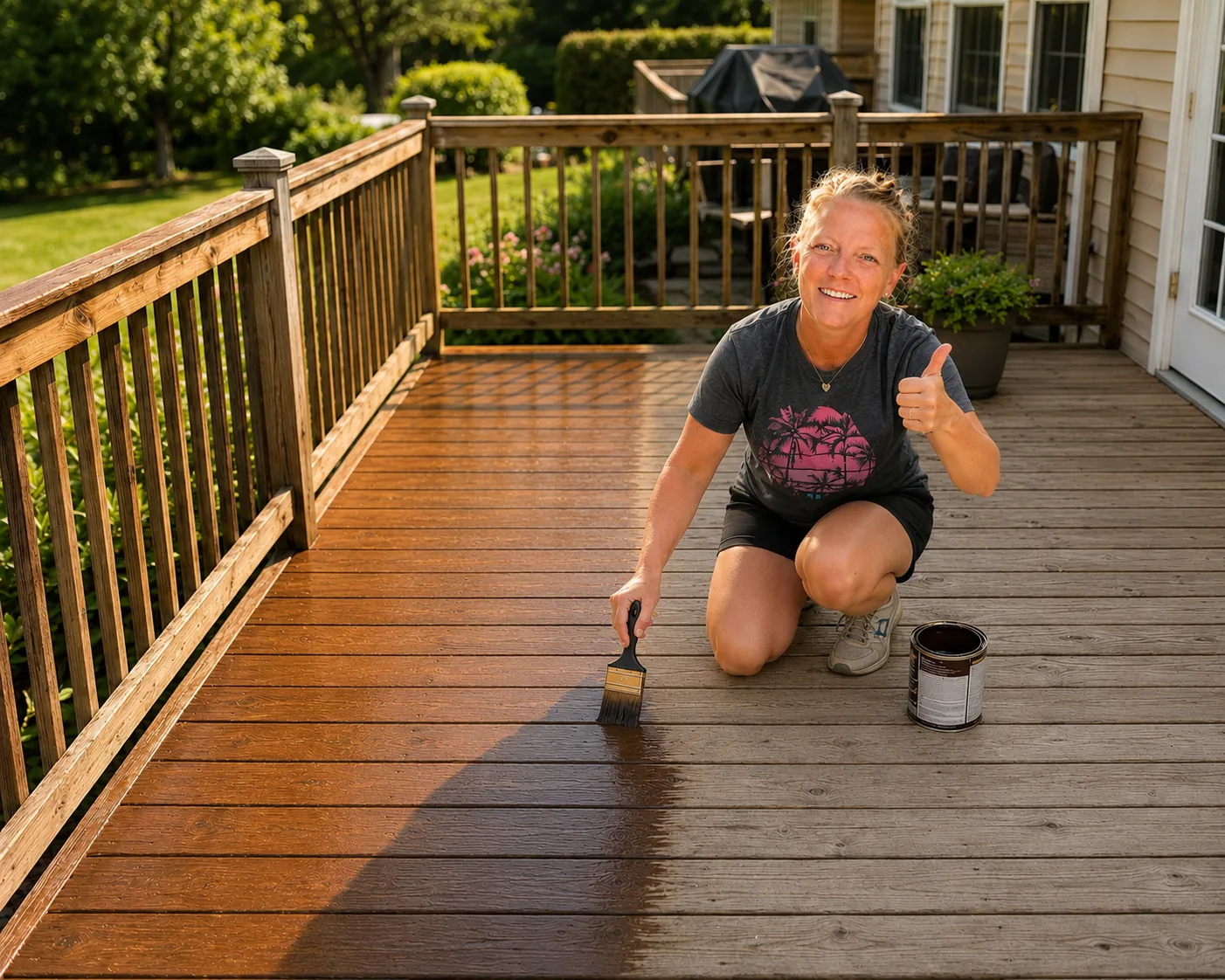
After prep, we explain whether staining, sealing, restoration, or another approach makes the most sense for the deck condition.
Peeling stain prep is often connected to deck staining, deck restoration, and deck washing. The goal is not to sell another coat of stain too soon. The goal is to identify the failed material, clean and prep the surface correctly, and explain what kind of finish result is realistic. Explore our interactive deck service area map to see approximate coverage across the I-380 Corridor and surrounding Eastern Iowa communities.
If the deck needs a different service, we would rather tell you that up front than sell the wrong job.
If your deck is peeling, send photos or request a free no-pressure estimate. We will help you understand whether it needs washing, scraping, light sanding, restoration, staining, sealing, or repair guidance first.
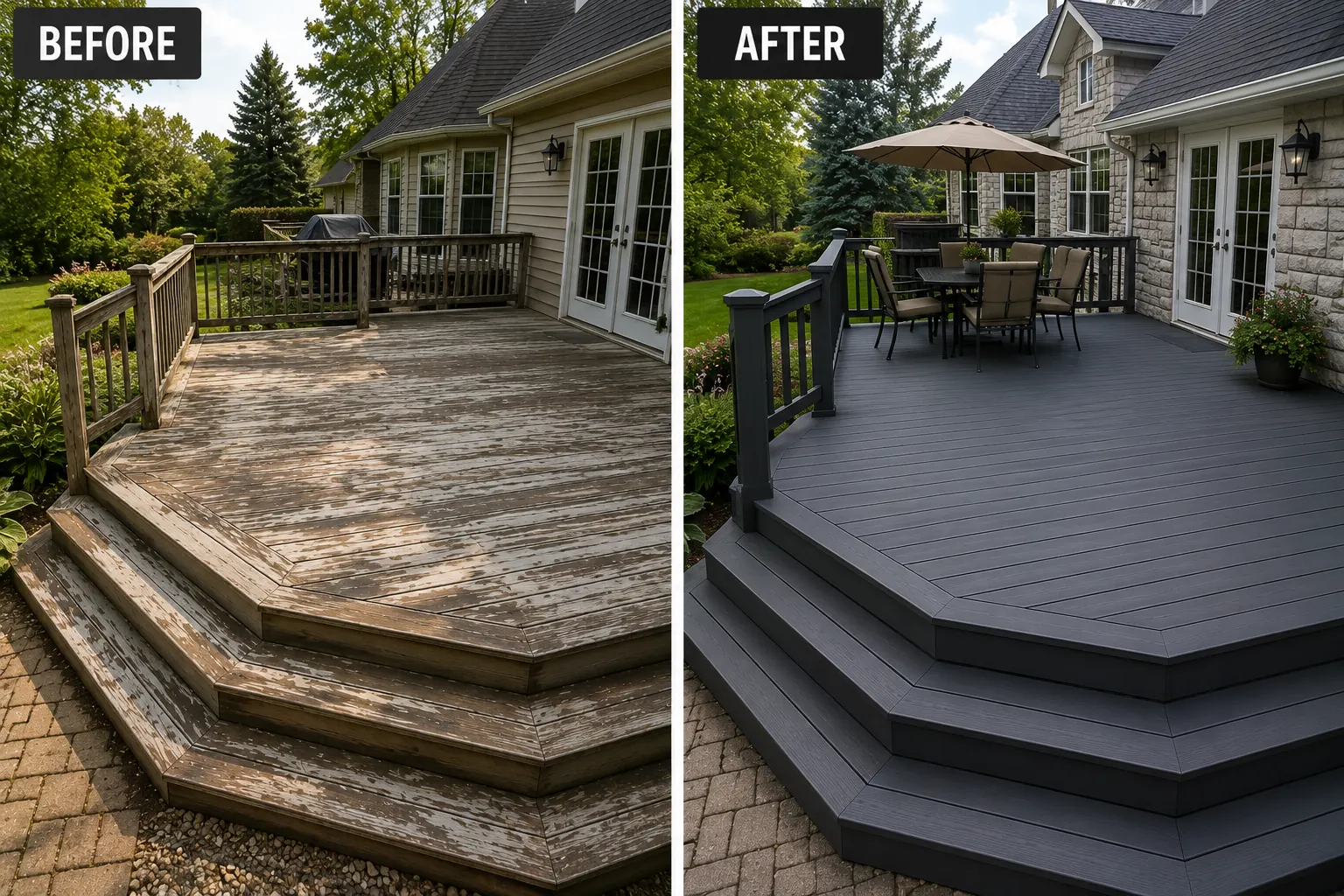
In many cases, yes. A peeling deck can often be improved if the boards are solid and the structure is in reasonable condition. The right answer depends on whether the problem is mostly surface coating failure, moisture, old product buildup, neglected maintenance, or deeper wood damage.
Use these homeowner guides to understand the surface condition, preparation, and realistic next step.
Quick answers before you request a free deck estimate.
Usually, no. Loose or failing stain should be evaluated and prepped first. If new stain is applied over peeling areas, it may not bond properly and can peel again.
Deck stain can peel because of moisture, poor prep, old coatings, applying stain over dirty wood, product buildup, or weather exposure. Iowa sun, humidity, rain, snow, and freeze-thaw cycles can also contribute to coating failure.
Not always. Some peeling decks need washing and scraping, while others need light sanding or more detailed prep. The right approach depends on the old stain and the wood underneath.
Many peeling decks can be improved if the wood is still solid. The key is identifying whether the problem is surface coating failure, poor prep, moisture, or deeper wood damage.
Yes. Solid stain and paint-like coatings can be more difficult to prep because they sit more on the surface. When they fail, they may peel, flake, or create uneven areas that need extra attention before restaining.
No. Controlled washing may remove loose contamination or some weak material, but pressure should not be used as a substitute for scraping, sanding, or a realistic failed-coating preparation plan.
The best first step is a deck condition review. If the boards are solid, the deck may be a candidate for washing, prep, and staining. If boards are soft, rotted, loose, or unsafe, repairs or replacement may need to be discussed first.
Need help deciding? Start with the services overview or request a free deck check.
Do not rush into adding more stain over the top. Send us a few photos or request an estimate, and we will give you an honest opinion on the right prep path for your deck.