Poor Cleaning and Surface Preparation
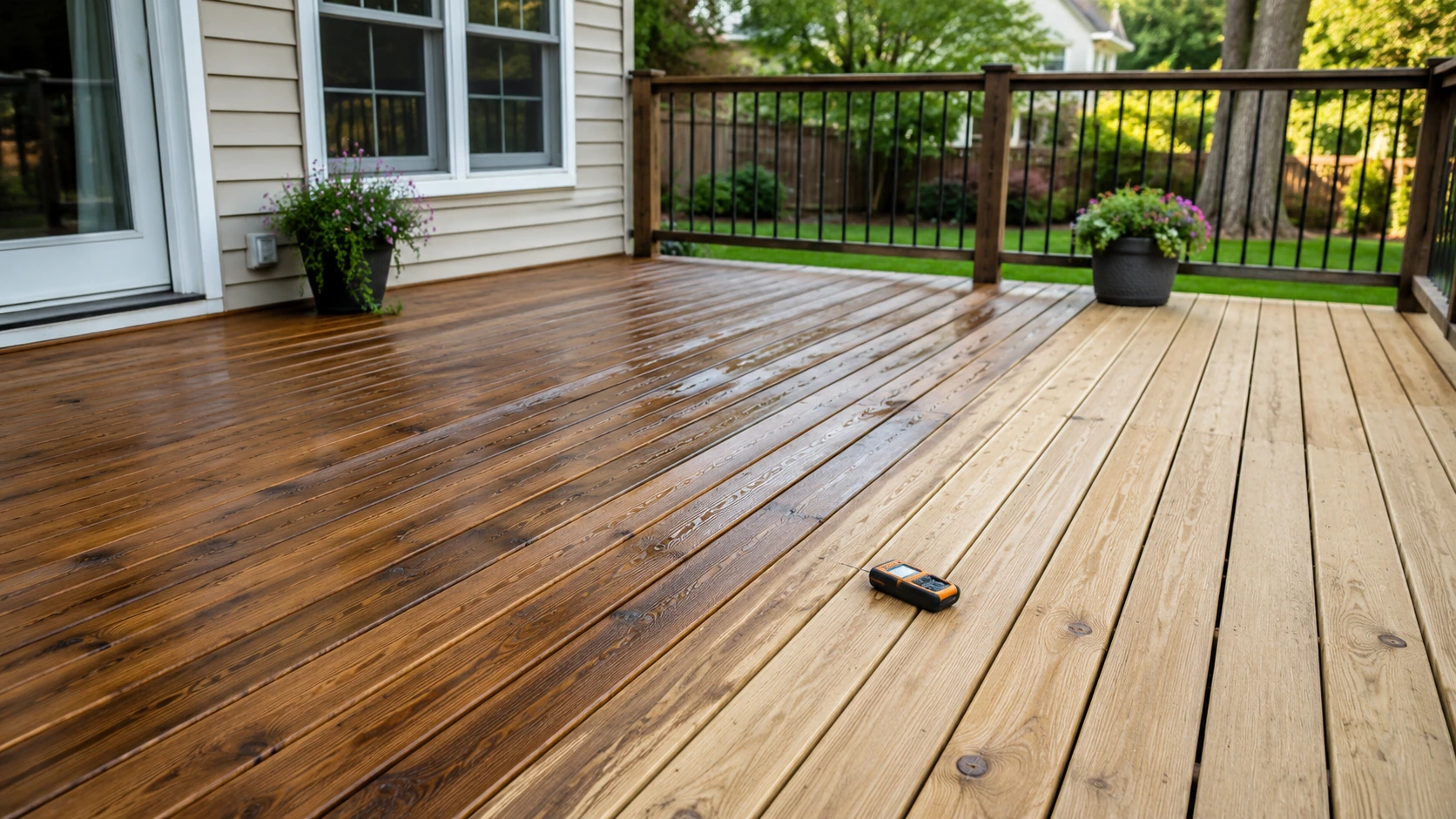
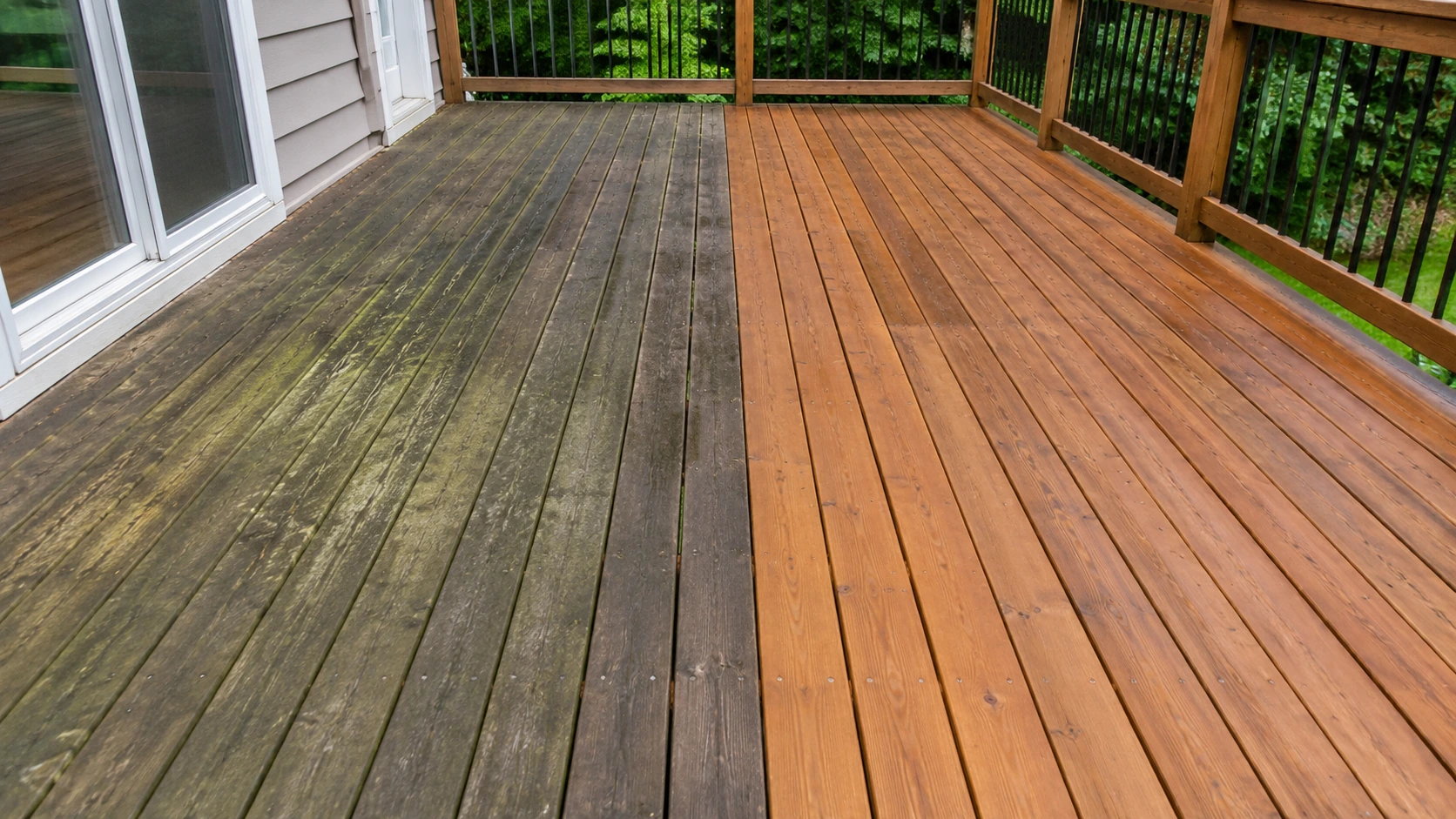
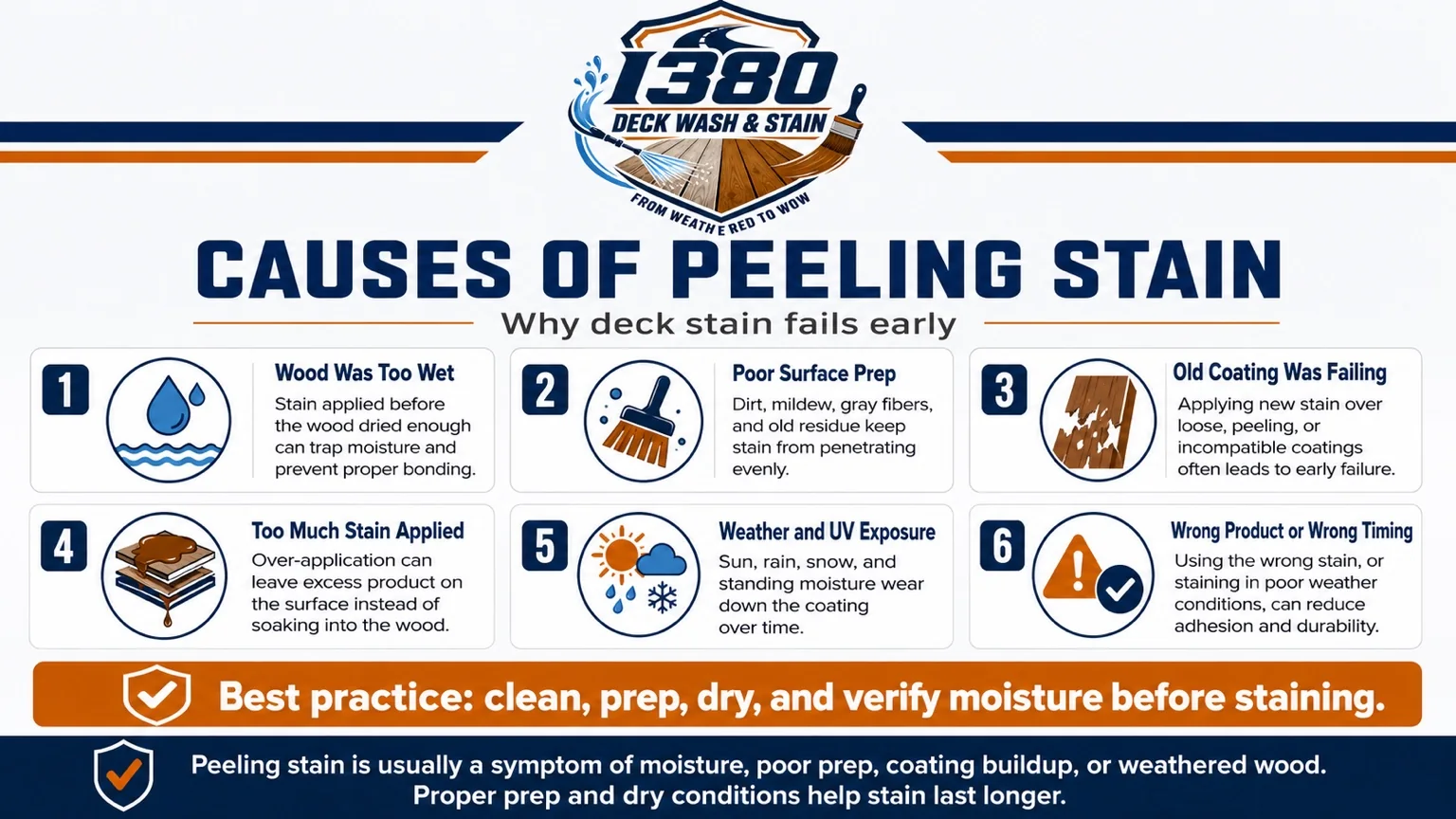
Stain needs a clean, stable surface. Dirt, pollen, mildew-like buildup, gray fibers, and loose old coating can prevent proper contact with the wood. If a new finish bonds to contamination or failing material, it may release when that weak layer moves or breaks down.
Preparation may include washing, scraping, feathering loose edges, light sanding, and enough dry time for the condition of the deck.
Moisture in or Around the Wood
Moisture can enter deck boards from rain, washing, shaded conditions, ground exposure, wet vegetation, or areas where water drains poorly. If the wood is stained before it is ready, moisture may interfere with absorption or become trapped beneath a film-forming coating.
Moisture problems may also come from below or from board ends, not only from the top surface. That is why a dry-looking surface does not always tell the whole story.
Applying Stain Before the Deck Is Dry
A rushed weather window can turn a good product into a disappointing result. The deck needs enough drying time for its exposure, airflow, humidity, and wood condition. Review how long a deck should dry before staining before relying on a fixed calendar.
Too Much Product or Incompatible Coatings
More stain is not automatically more protection. Some products are designed to penetrate, while others form more of a surface film. Excess material that cannot absorb or cure correctly may remain vulnerable to peeling.
Applying a new product over an incompatible old coating can also cause trouble. The previous finish, remaining buildup, and desired new finish should be considered together.
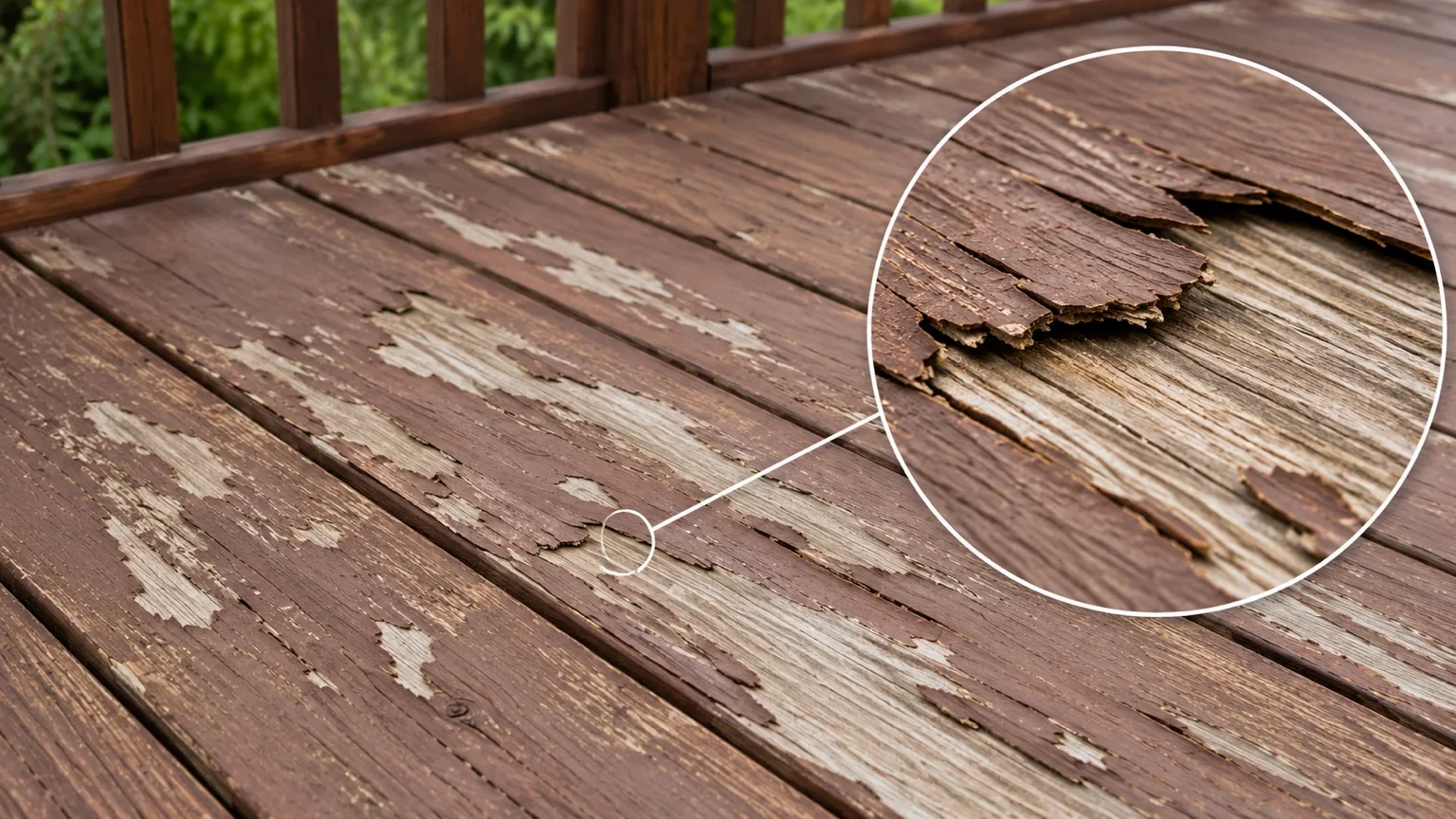
Sun, Weather, and Normal Wear
Decks face UV exposure, rain, snow, freeze-thaw cycles, foot traffic, furniture movement, and repeated wetting and drying. Horizontal boards usually take more direct exposure than vertical surfaces. Steps and traffic lanes may wear differently from protected corners.
Normal weathering does not excuse premature failure, but it does mean every coating has maintenance limits.
Why Staining Over Peeling Areas Usually Fails
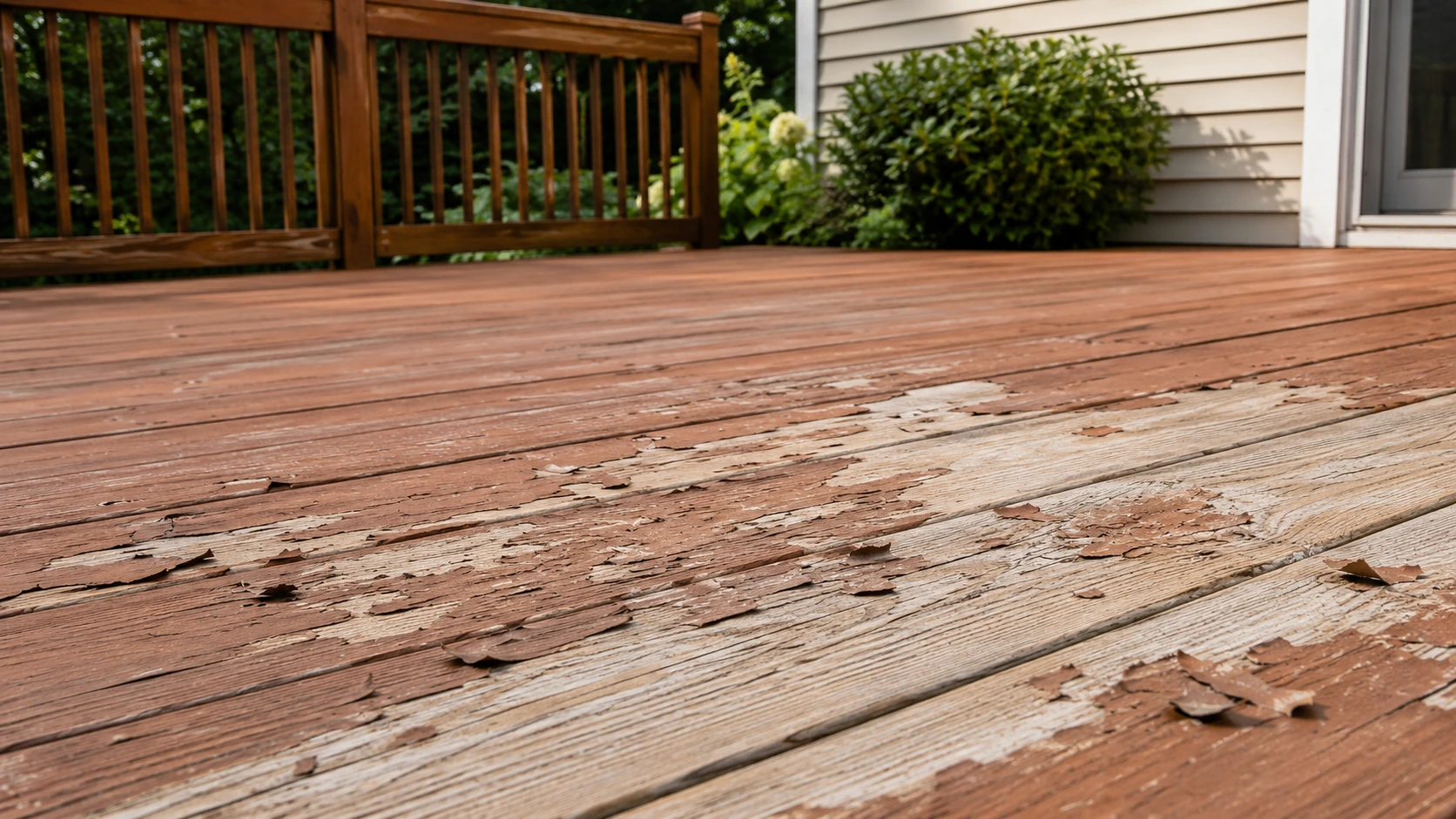
A fresh coat may temporarily hide the problem, but it cannot make loose material stable. If the new stain bonds to an old layer that is already releasing, both layers may come off together.
The better question is not “What can cover this?” It is “What needs to be removed or stabilized so the next finish has a sound surface?” Our peeling deck stain prep page explains that decision process.
What to Evaluate Before Refinishing
The prep plan depends on how much coating is failing, whether the boards are sound, where moisture collects, and what kind of finish is already present. A deck with a few worn traffic areas is different from one with thick peeling coating across boards, rails, and steps.
- Extent and thickness of the failed coating
- Condition of deck boards, rails, stairs, and fasteners
- Shade, drainage, and moisture exposure
- Previous coating type and desired new finish
- Realistic appearance after preparation
When Repair Comes Before Stain
Stain is not a structural repair. Soft boards, unstable stairs, loose railings, or deep rot should be addressed before cosmetic finish work. Cleaning and prep can improve sound wood, but they cannot restore lost structural strength.
Why Does Deck Stain Peel? FAQ
Can I put new stain over peeling deck stain?
Usually not without preparation. Loose or failing coating should be evaluated and removed or stabilized as appropriate before a new finish is applied.
Does peeling always mean the stain product was bad?
No. Product choice can matter, but preparation, moisture, application thickness, coating compatibility, weather, and deck condition can also cause failure.
Will pressure washing remove all peeling stain?
Washing may remove loose material, but widespread or thick coating failure can require scraping, sanding, or a broader restoration plan.
Can a peeling deck still be restored?
Often, yes, when the boards are structurally sound. The realistic result depends on coating history, wood condition, and the amount of preparation required.