Damage Caused by Excessive Pressure
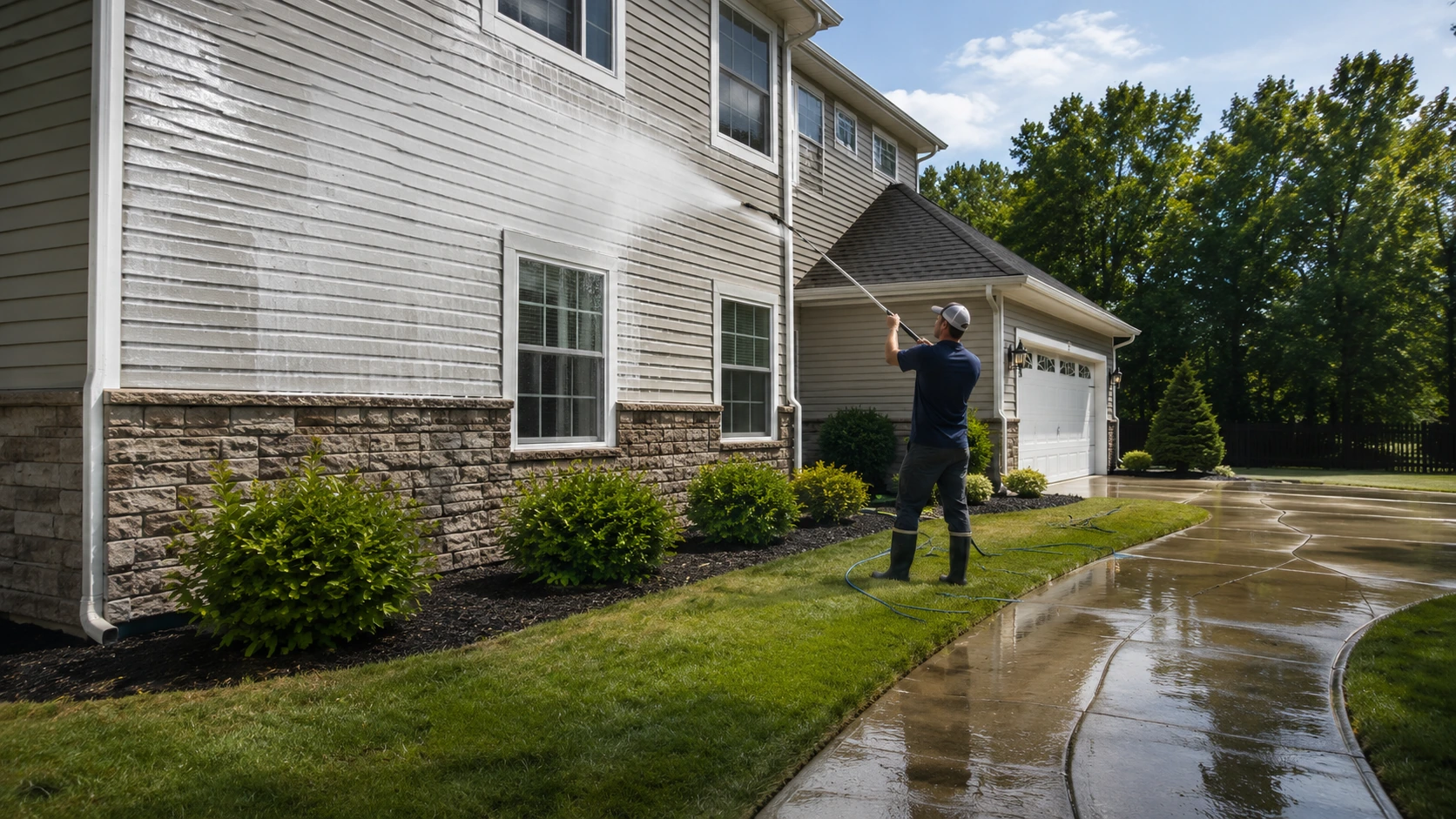
A concentrated stream can leave marks, lift loose material, damage brittle finishes, or force debris deeper into seams. The risk increases when the wand is held close or the spray remains in one location.
Damage may not be limited to the visible face of the siding. Water can travel into areas that are not designed for direct high-pressure exposure.
Water Forced Behind Siding
Most siding systems manage normal weather when installed and maintained correctly, but pressure directed upward into laps, seams, vents, and trim transitions can push water where it does not belong.
A house-washing plan should account for openings, damaged caulk, loose panels, and exterior penetrations before cleaning begins.
Oxidation and Chalking
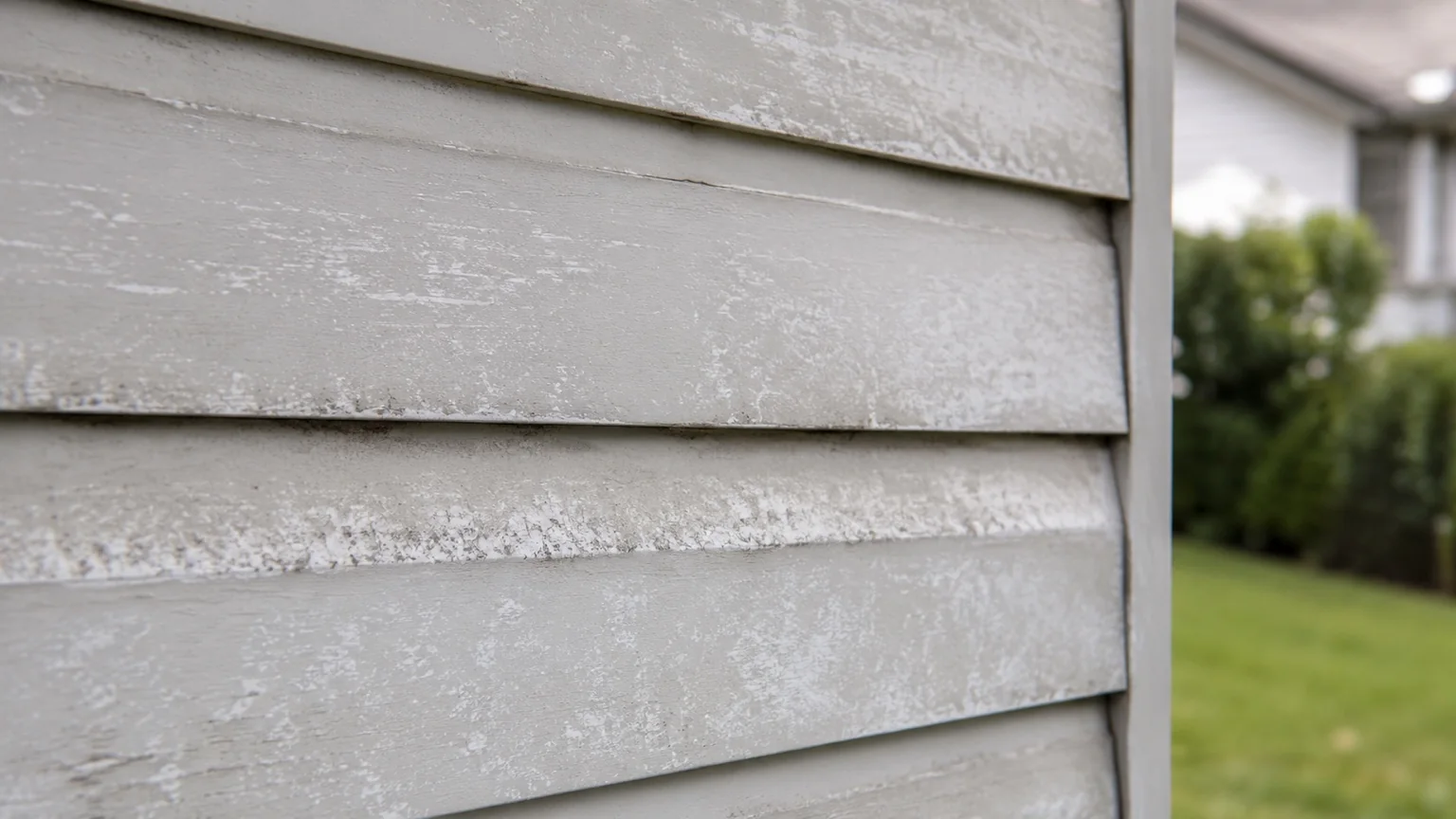
Some siding develops a chalky oxidized layer as it ages and weathers. Cleaning may remove dirt while revealing uneven oxidation underneath. Aggressive pressure can create visible streaks or disturb the surface unevenly.
Oxidation is a material-condition issue, not simply dirt, and cleaning may not reverse it.
Loose, Cracked, or Aging Materials
Cracked siding, loose panels, damaged trim, failing seals, and brittle materials should be identified before washing. Cleaning cannot repair them, and high pressure can worsen an existing weakness.
Why Distance and Spray Pattern Matter
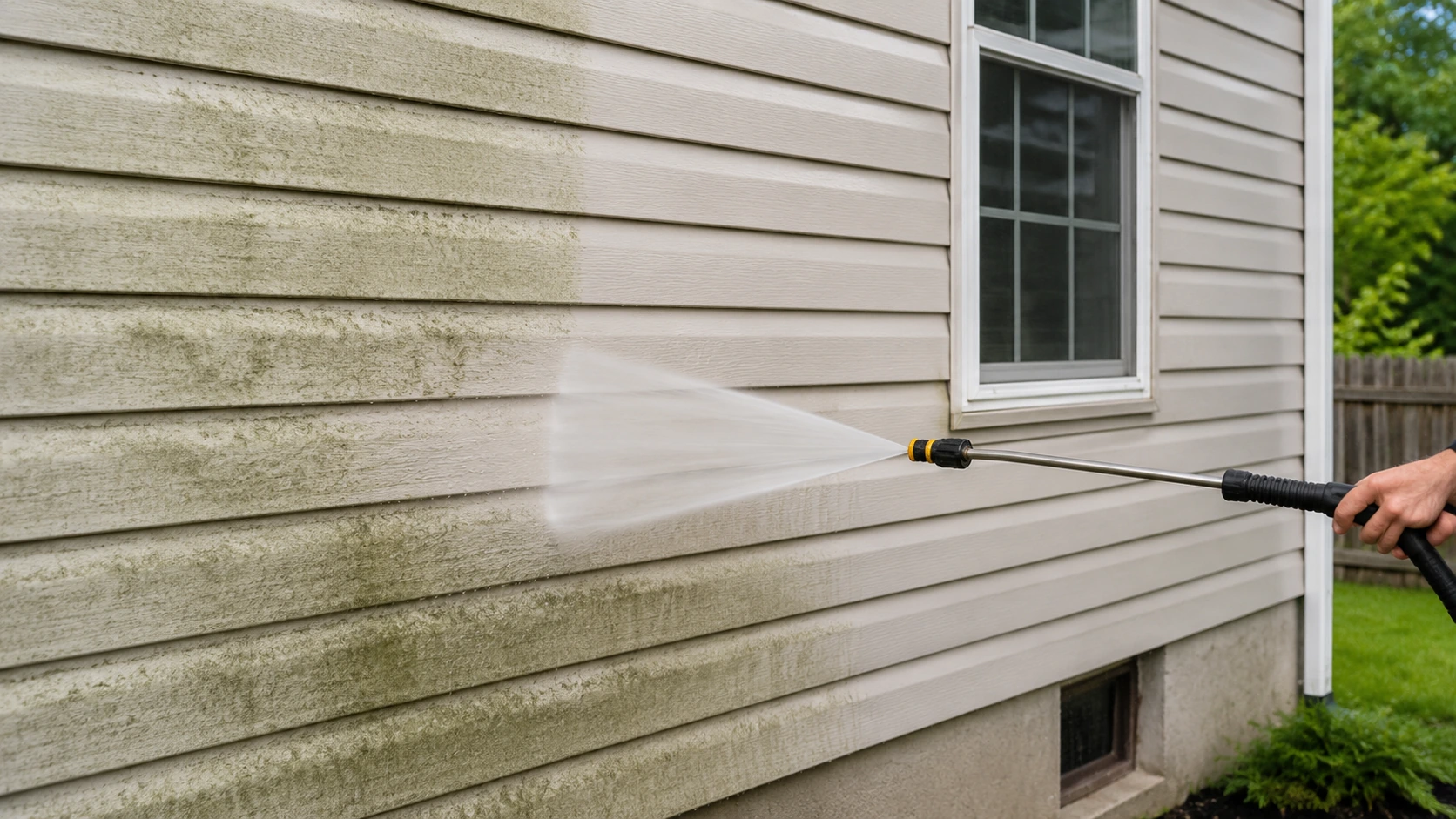
Pressure decreases as the spray spreads and moves farther from the surface. A broad pattern and consistent movement are generally more forgiving than a narrow concentrated stream.
The operator should test an inconspicuous area and adjust based on how the siding responds.
Lower-Pressure House-Washing Methods
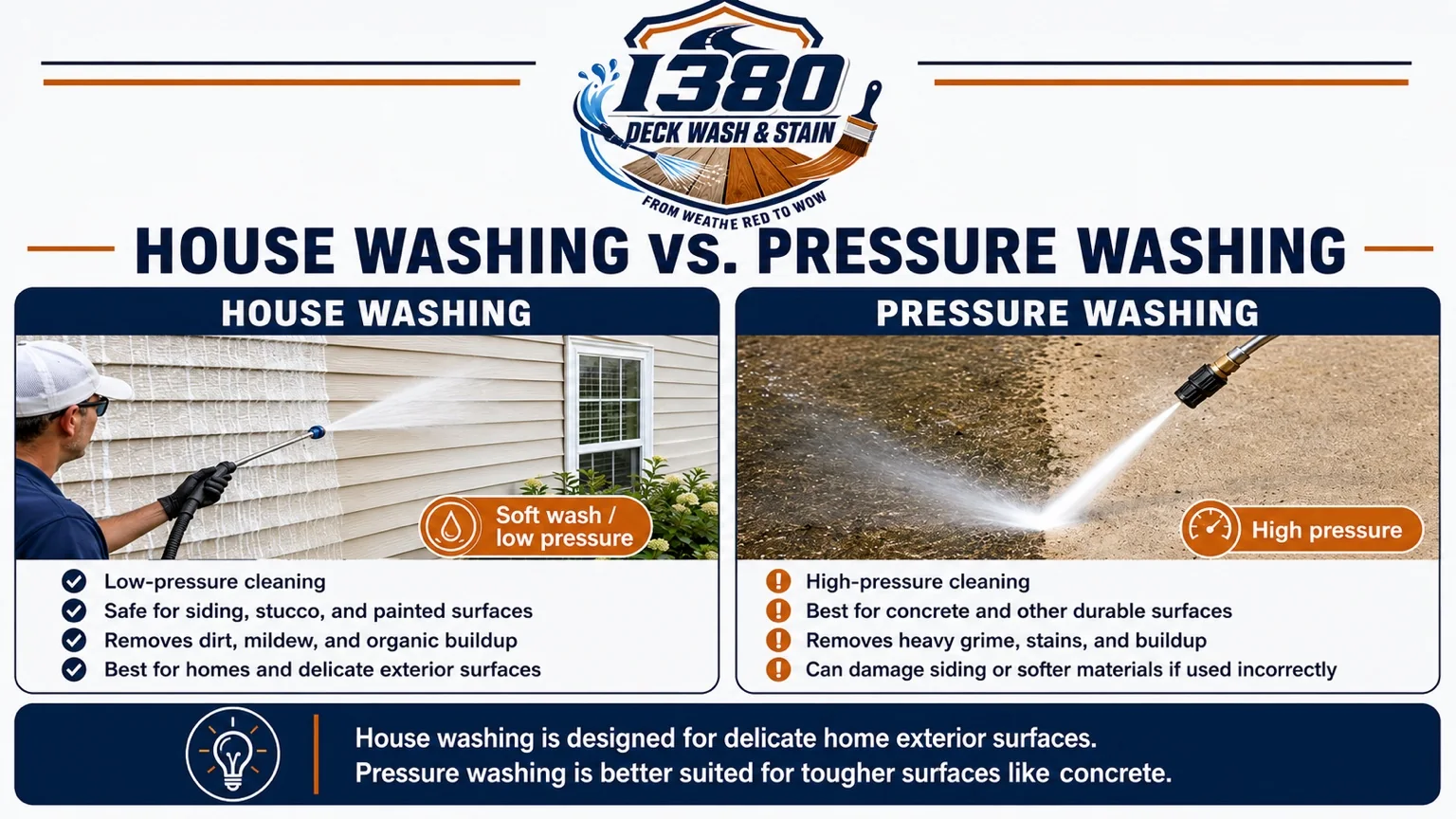
A lower-pressure approach can target dirt and organic buildup without relying on force alone. The method still requires preparation, controlled application, thorough rinsing, and protection of nearby property.
What Cleaning Cannot Repair
Cleaning cannot reverse fading, oxidation, hail damage, cracks, warping, failed paint, or material deterioration. In some cases, a cleaner surface makes existing wear easier to see.
Honest expectations should separate removable buildup from permanent surface change.
When Siding Should Be Evaluated First
Ask for an inspection before cleaning when siding is loose, brittle, heavily oxidized, recently repaired, or showing signs of water intrusion. Use our house washing page to understand the service approach and compare house washing with pressure washing.
Can Pressure Washing Damage Siding? FAQ
Can pressure washing put holes in siding?
A concentrated high-pressure stream can damage some siding materials or worsen existing cracks and weak areas. The method should be adjusted to the surface.
Can water get behind siding during cleaning?
Yes, especially if spray is directed into laps, seams, vents, or damaged areas. A controlled washing direction and inspection of openings matter.
Does house washing remove siding oxidation?
It may remove dirt on top of oxidation, but chalking and weathered material can remain. Cleaning cannot restore material that has physically changed.
What is the safer way to clean siding?
Use a surface-appropriate house-washing method with controlled pressure, proper distance, attention to openings, and realistic expectations for existing damage.