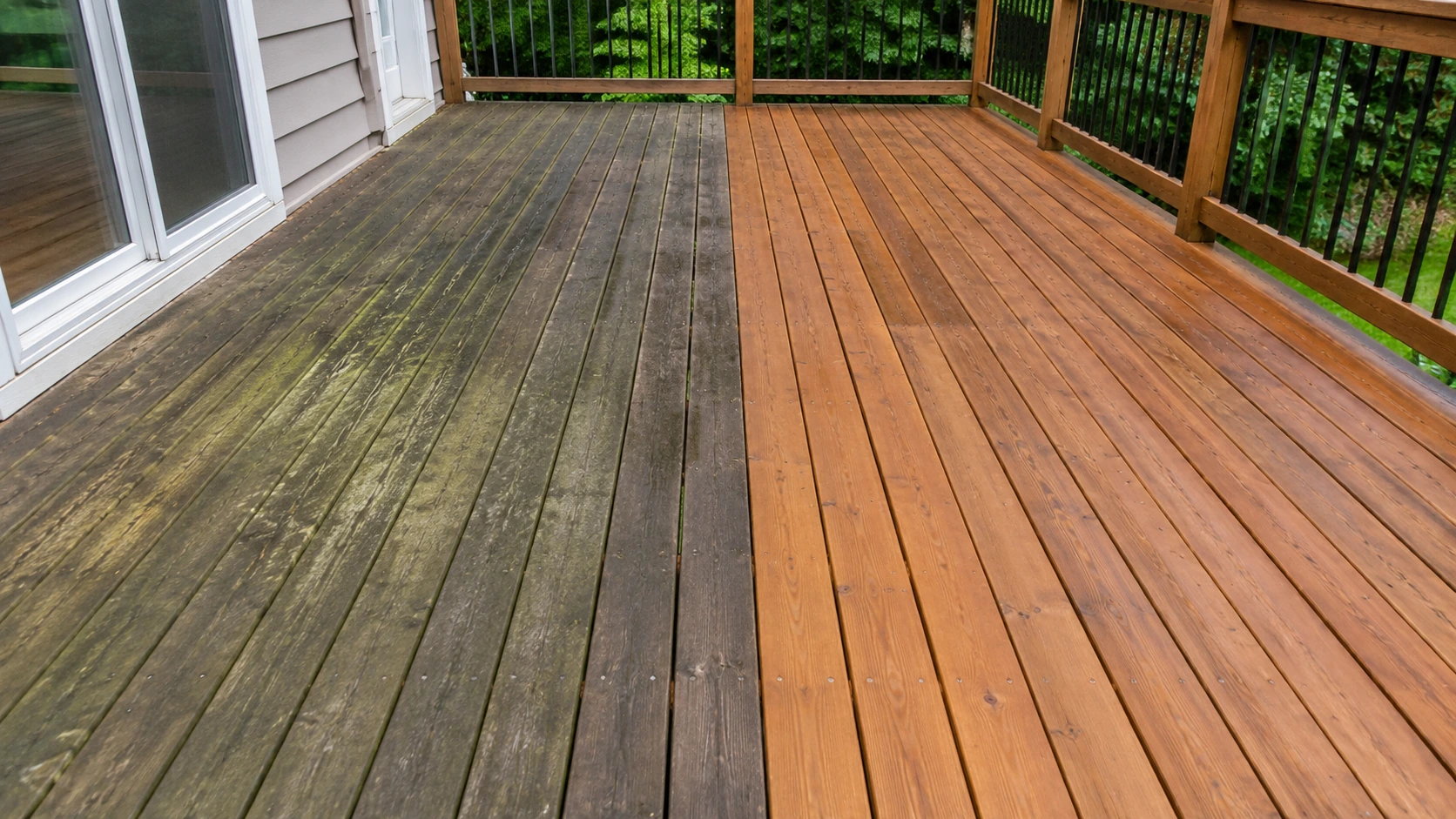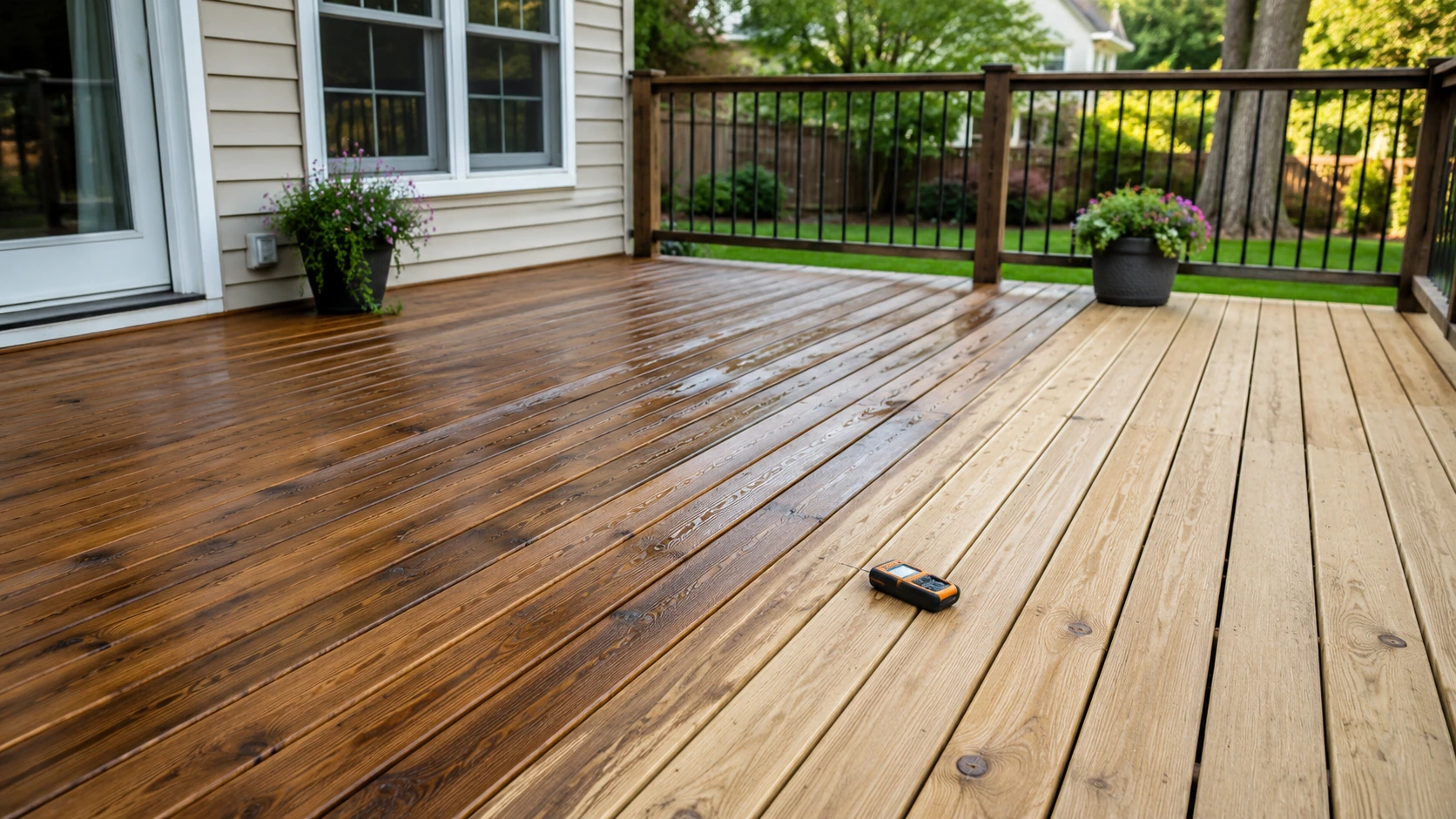
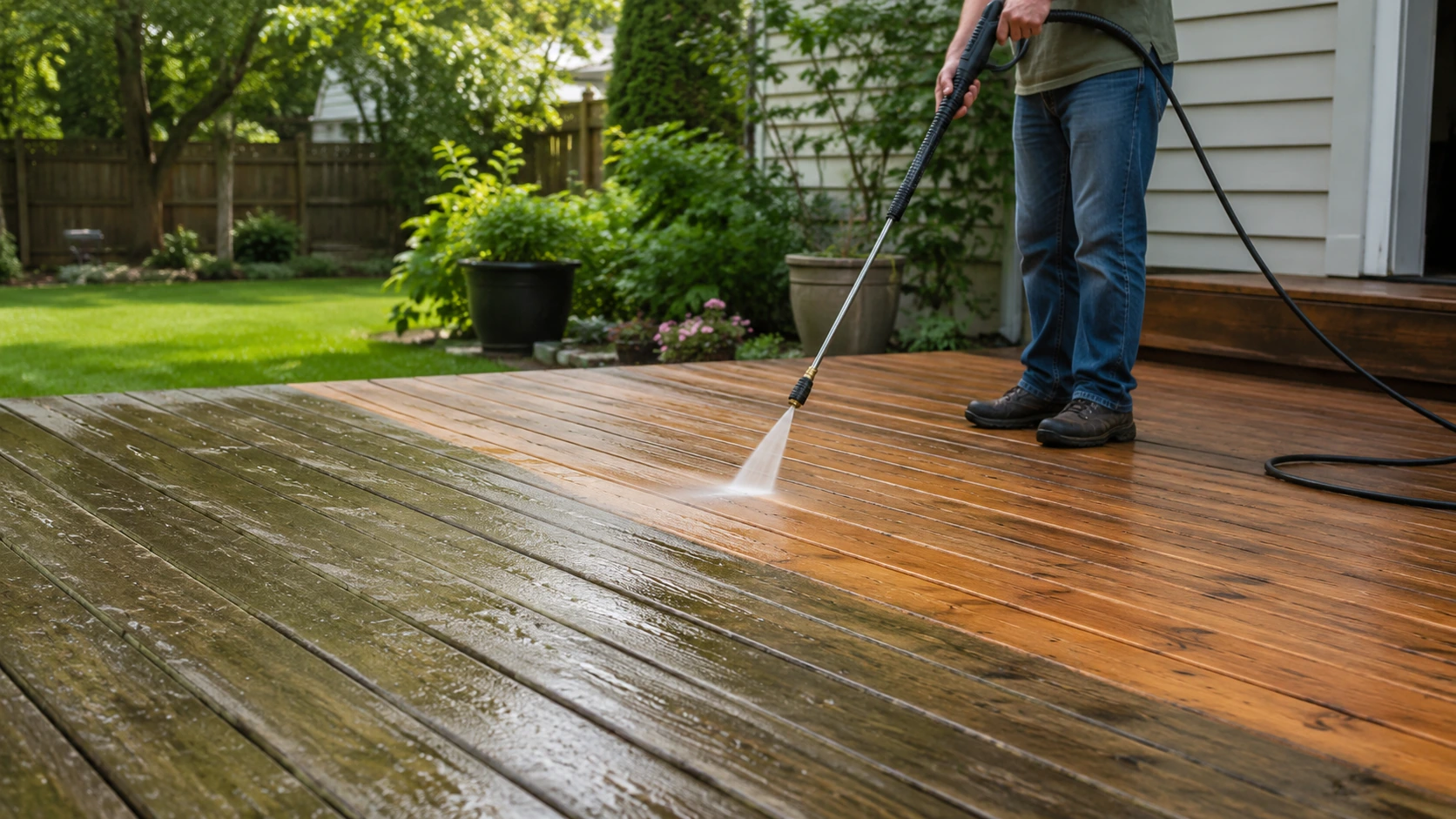
Why Deck Wood Needs a Different Approach
Concrete can tolerate a cleaning approach that would be unnecessarily aggressive on many wood surfaces. Deck boards have grain, softer earlywood, edges, fastener areas, checks, and weathered fibers that can respond differently to water pressure.
The objective is not to carve a visibly clean line into the board. It is to loosen and remove dirt, pollen, algae-like buildup, and surface contamination while preserving the wood for the next step.
- Wood species and age affect how easily fibers can be raised.
- Weathered boards may be softer at the surface than newer wood.
- Railings, spindles, steps, and board ends often need extra control.
How Excessive Pressure Can Damage a Deck
Too much pressure can leave wand marks, fuzzy grain, splinters, gouges, or uneven color. Damage is more likely when a narrow tip is used, the wand is held too close, or the spray pauses in one place.
Raised fibers may not be obvious until the deck dries. That is one reason a careful inspection after cleaning and dry time matters before stain or sealer is applied.
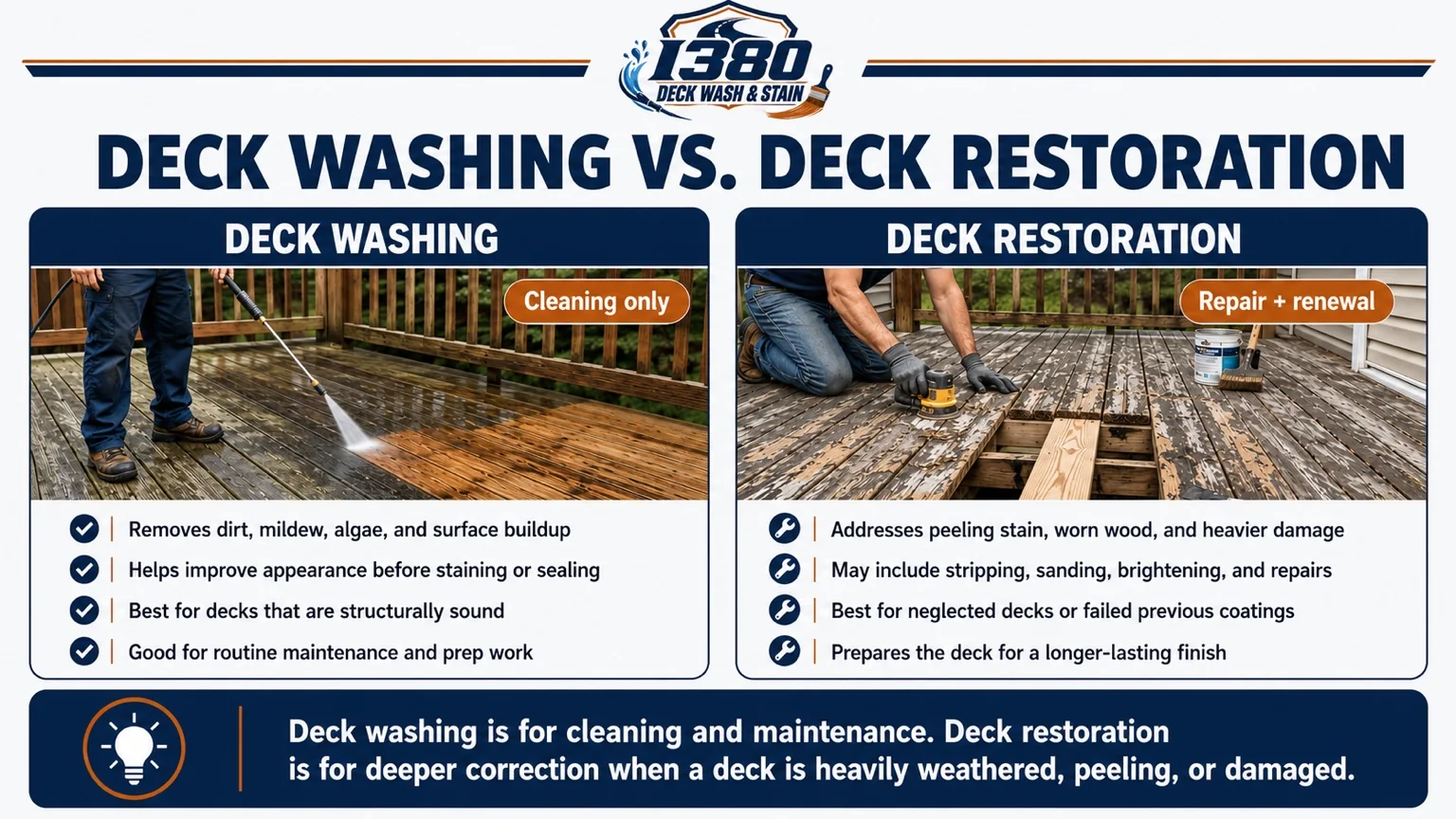
Pressure, Distance, and Movement Work Together
No single pressure number guarantees a safe result. The same machine can behave very differently based on the tip, distance, angle, and speed of movement. A broader spray held at a reasonable distance is generally more forgiving than a concentrated stream close to the board.
A controlled test area helps reveal how the wood responds before the entire deck is cleaned. The operator should maintain consistent movement and follow the board direction rather than creating stop-and-start marks.
When Deck Washing May Be Appropriate
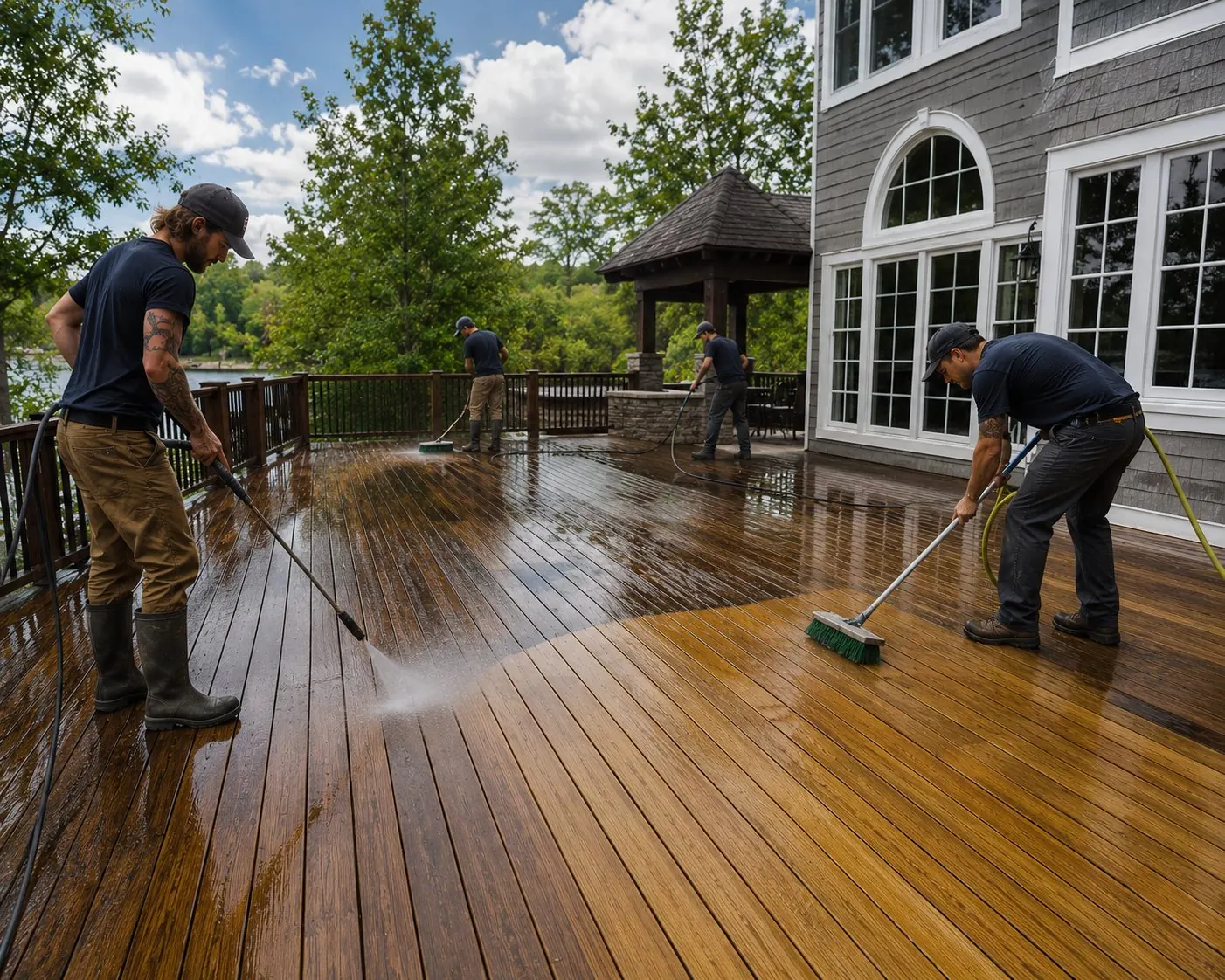
Washing may be a sensible first step when the deck has dirt, pollen, organic buildup, slippery areas, or general weathering that prevents an honest assessment of the wood. It can also be part of preparation before deck staining or deck sealing.
Cleaning does not automatically mean the deck is ready for a finish. It still needs suitable dry time, and peeling coatings or rough fibers may require additional preparation.
- The boards are structurally sound.
- The primary problem is surface buildup rather than widespread coating failure.
- The cleaning method can be matched to the wood condition.
- There is enough time for the deck to dry before any finish work.
When Gentler Cleaning or More Prep May Be Better
Some decks benefit from lower pressure, brushing, or a cleaning process that relies less on mechanical force. Heavily weathered wood, delicate details, loose coatings, and damaged boards may need a different plan.
If stain is peeling across the deck, washing alone is unlikely to create a stable surface for a new coating. Review why deck stain peels and the options on our peeling stain prep page before adding another coat.
Cleaning Before Staining or Sealing
Finish performance begins with the condition of the wood. Dirt, mildew-like buildup, old loose coating, and excess moisture can interfere with absorption or adhesion. After washing, the deck should dry thoroughly and be reviewed for raised grain, loose stain, and areas that need sanding or repair.
That full sequence—inspect, clean, dry, prepare, then finish—is why deck washing and staining should be treated as a system rather than two unrelated tasks.
Signs the Deck Needs More Than Washing
Cleaning can reveal the true condition of the deck, but it cannot repair soft boards, loose stairs, structural movement, deep splintering, or widespread coating failure. Those conditions may call for repair guidance or a fuller deck restoration plan.
- Soft, rotten, or unstable boards
- Loose railings, stairs, or fasteners
- Thick peeling solid stain or paint-like coating
- Deep cracking, severe splintering, or widespread surface erosion
Can You Pressure Wash a Deck? FAQ
Can pressure washing ruin a wood deck?
Yes. Excessive pressure, a narrow spray pattern, or holding the wand too close can scar wood and raise fibers. The method should be adjusted to the deck condition.
Should a deck be pressure washed before staining?
Many decks need cleaning before staining, but washing is only one part of preparation. The wood must also dry properly, and loose coating or rough fibers may need additional prep.
Can a dirty deck be stained without washing?
Staining over dirt, pollen, organic buildup, or loose material can create uneven results and interfere with the finish. The surface should be clean and ready first.
Is deck pressure washing the same as driveway pressure washing?
No. Wood generally requires a more controlled approach than concrete. The pressure, distance, spray pattern, and cleaning process should match the surface.