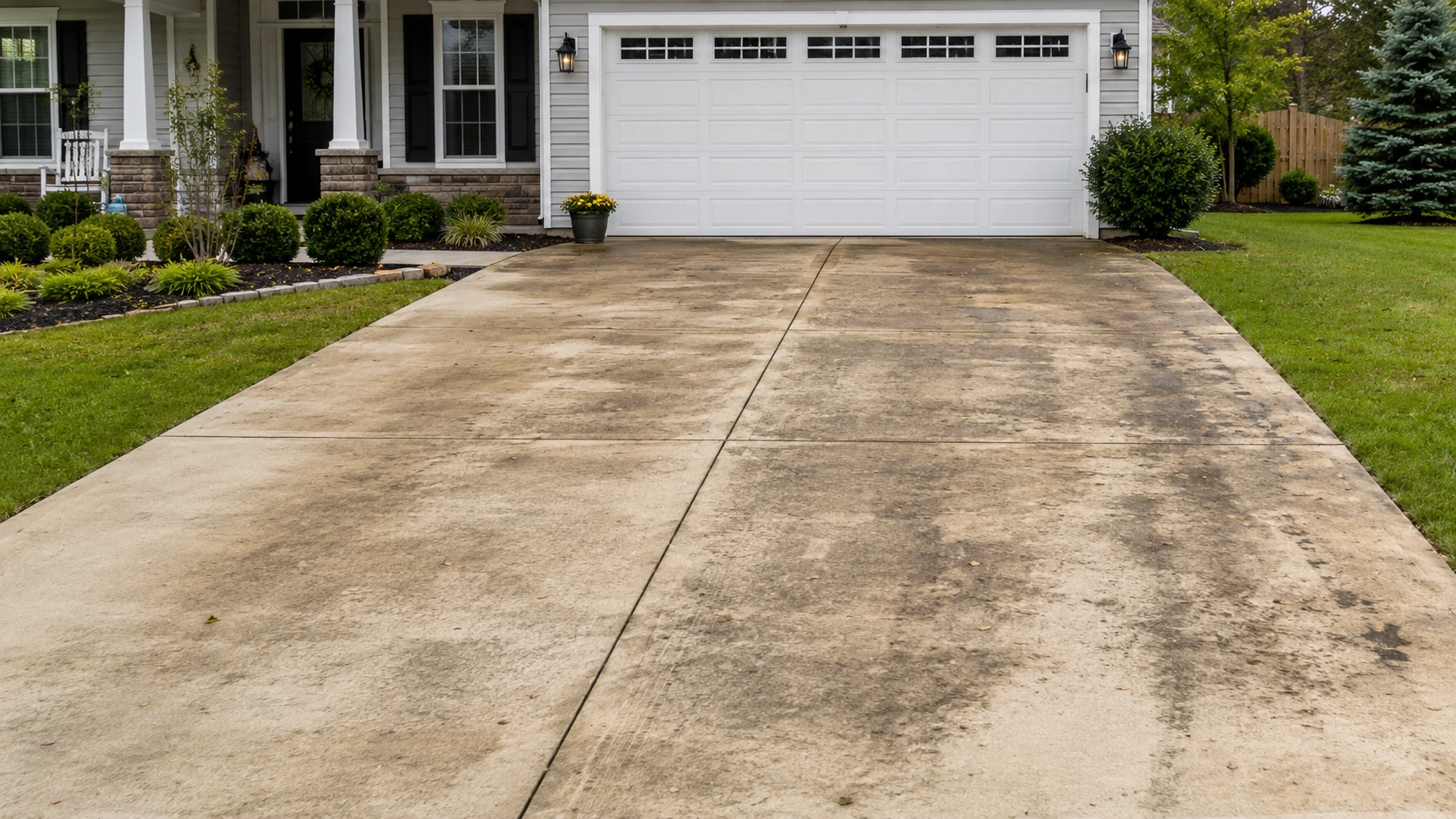
Why Black Staining Has Multiple Causes
Color alone is not a diagnosis. A shaded green-black film can be organic, while a dark spot beneath a vehicle may be petroleum-based. Rust, fertilizer, minerals, soot, and embedded soil can create additional discoloration.
The correct cleaning approach and realistic outcome depend on the source.
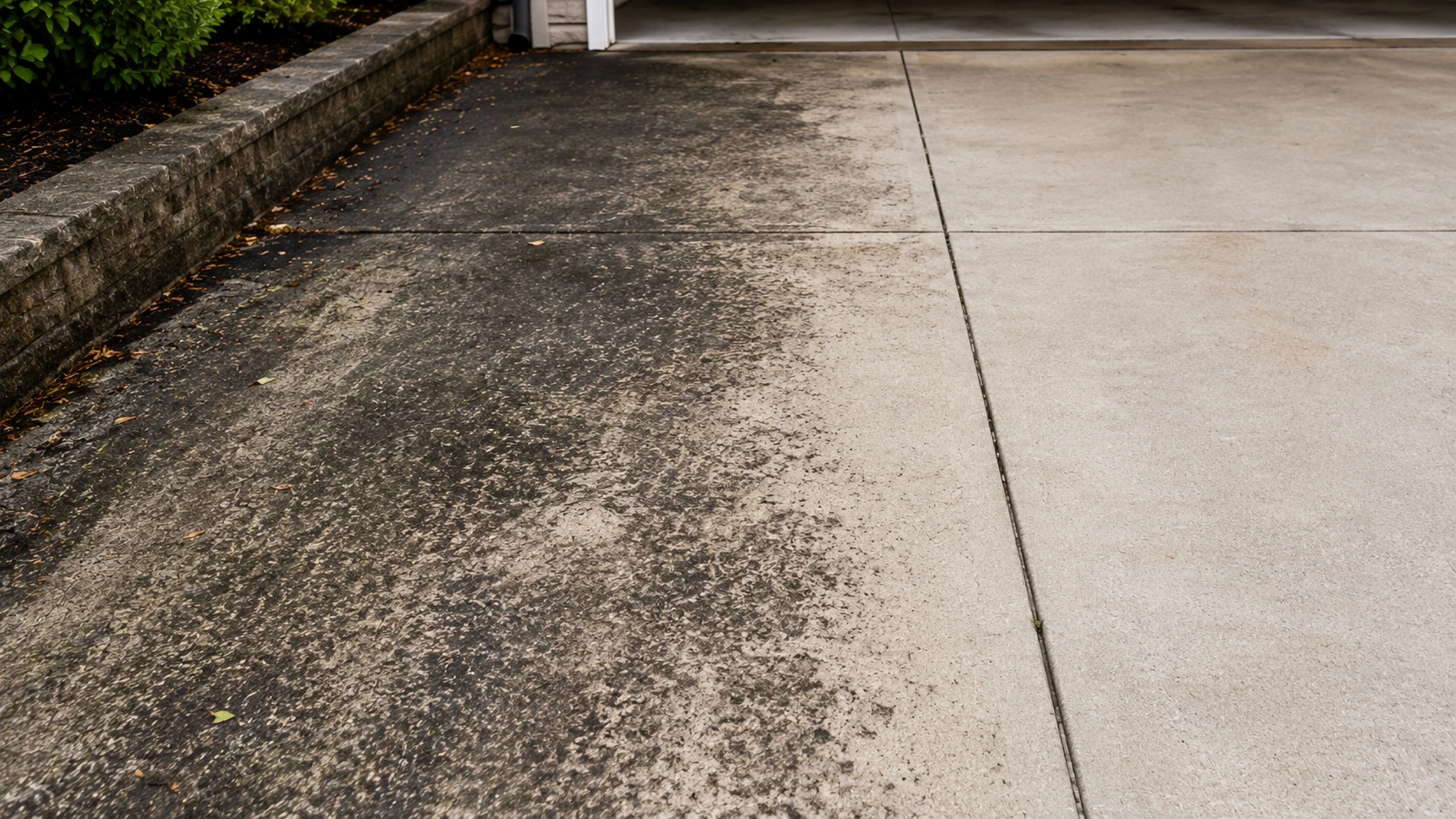
Moisture and Shaded Conditions
Concrete near downspouts, trees, north-facing walls, retaining structures, or poor drainage may remain damp longer. Moisture encourages organic buildup and traps airborne dirt.
Improving drainage and reducing debris can help slow recurrence after cleaning.
Organic Growth and Surface Film
Algae-like and mildew-like growth can form a dark or green-black film, especially where the surface stays damp. This buildup may become slippery and often returns if the underlying shade and moisture conditions remain.
Embedded Dirt and Grime
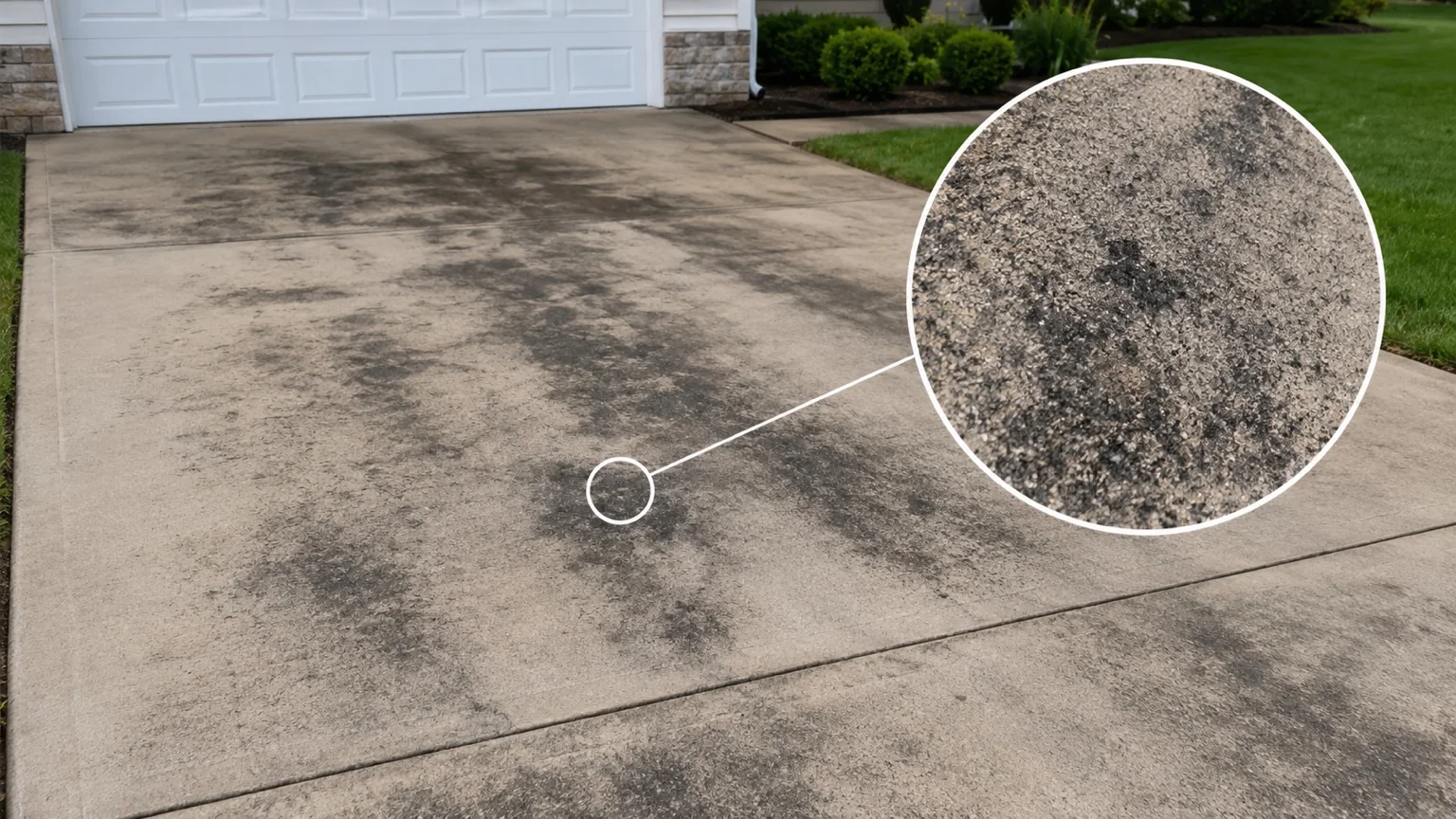
Fine soil, road film, soot, and decomposed leaves can lodge in the texture of concrete. A broad dark cast may be the accumulation of many seasons rather than one specific spill.
Vehicle-Related Stains
Oil, transmission fluid, tire rubber, and road residue behave differently from organic buildup. Some may penetrate the concrete and remain visible even after the surface is substantially cleaner.
Fresh spills and old embedded stains should not receive identical expectations.
Rust, Minerals, and Other Discoloration
Metal furniture, irrigation water, fertilizer, and mineral deposits can create orange, brown, or dark reactions. Paint, sealers, and previous treatments may also change how the concrete looks.
Why Diagnosis Matters Before Cleaning
A contractor should ask where the stain is located, how long it has been present, whether it changes with moisture, and what activities occur nearby. A small test area can help set expectations.
What Pressure Washing May Improve
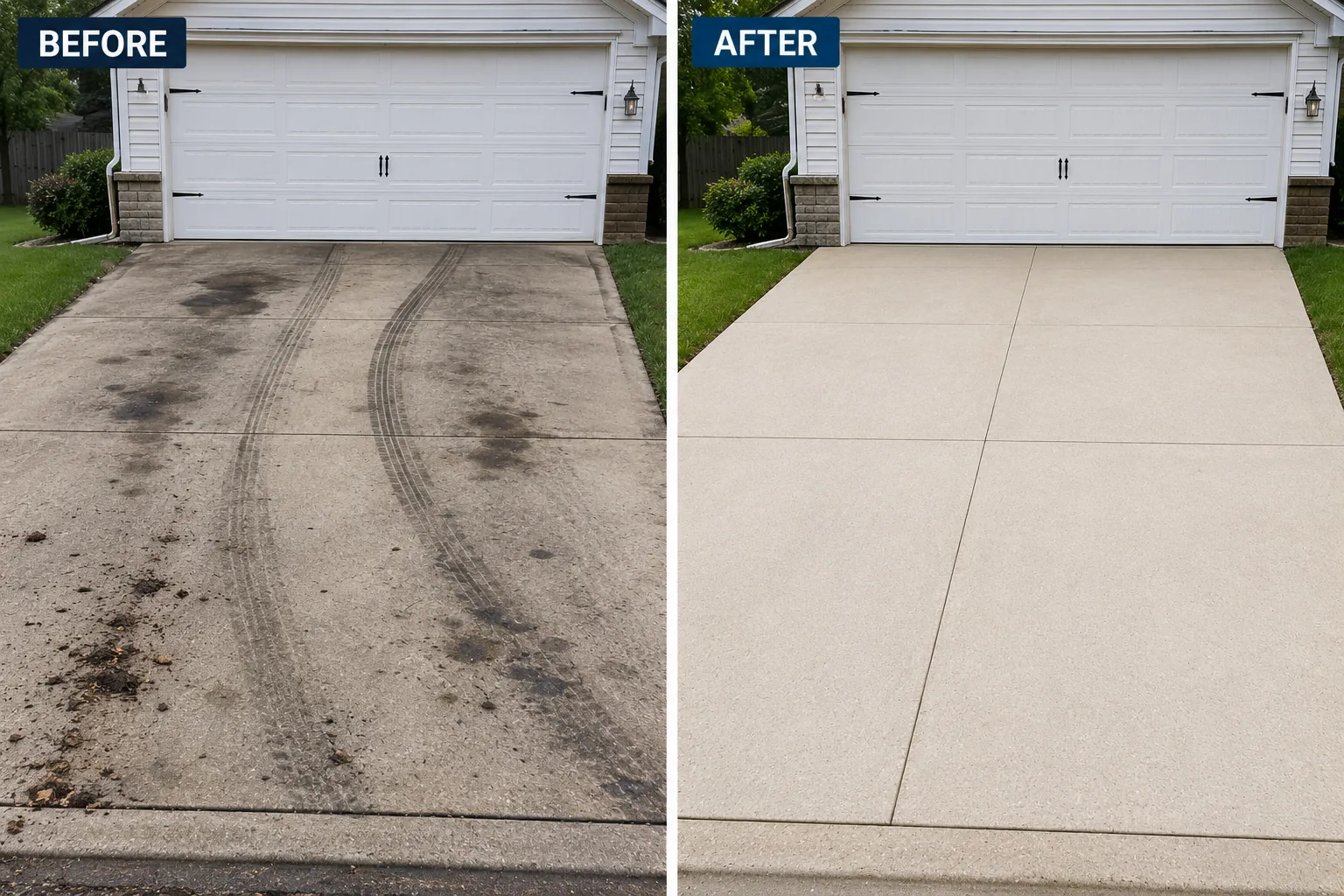
Surface dirt, loose organic buildup, and general weathering can often improve. The method should still match the concrete age, condition, cracks, joints, coatings, and nearby property.
See driveway and patio cleaning or sidewalk and walkway cleaning for service details.
What Cleaning May Not Completely Remove
Deep oil, rust, paint, mineral reactions, previous coating damage, and permanent discoloration may remain. Cleaning can improve the overall surface while leaving a faint or visible stain.
What Causes Black Stains on Concrete? FAQ
Are black concrete stains always mold?
No. Dark stains can come from organic growth, dirt, oil, tire residue, minerals, rust reactions, or other contaminants.
Will pressure washing remove black stains from concrete?
It may improve surface buildup, but the result depends on the cause, depth, concrete condition, and previous treatments.
Why do stains return in the same place?
Shade, moisture, drainage, leaves, soil, or vehicle use may continue creating the same conditions after cleaning.
Can pressure washing damage concrete?
Yes, especially if the concrete is weak, scaling, coated, or cleaned with excessive pressure. The surface should be evaluated first.