Why Restaining Intervals Vary
Fence boards face different conditions on each side. One side may receive intense afternoon sun while the other remains shaded by vegetation. Rain exposure, irrigation, snow, soil contact, wood species, and the previous coating all influence maintenance timing.
Fading and Uneven Color
Color loss is one of the most visible signs of weather exposure. Top rails, board edges, gates, and south- or west-facing sections may fade faster than protected areas.
Fading alone does not reveal whether the wood is ready for stain; the surface still needs cleaning and preparation.
Graying and Weather Exposure
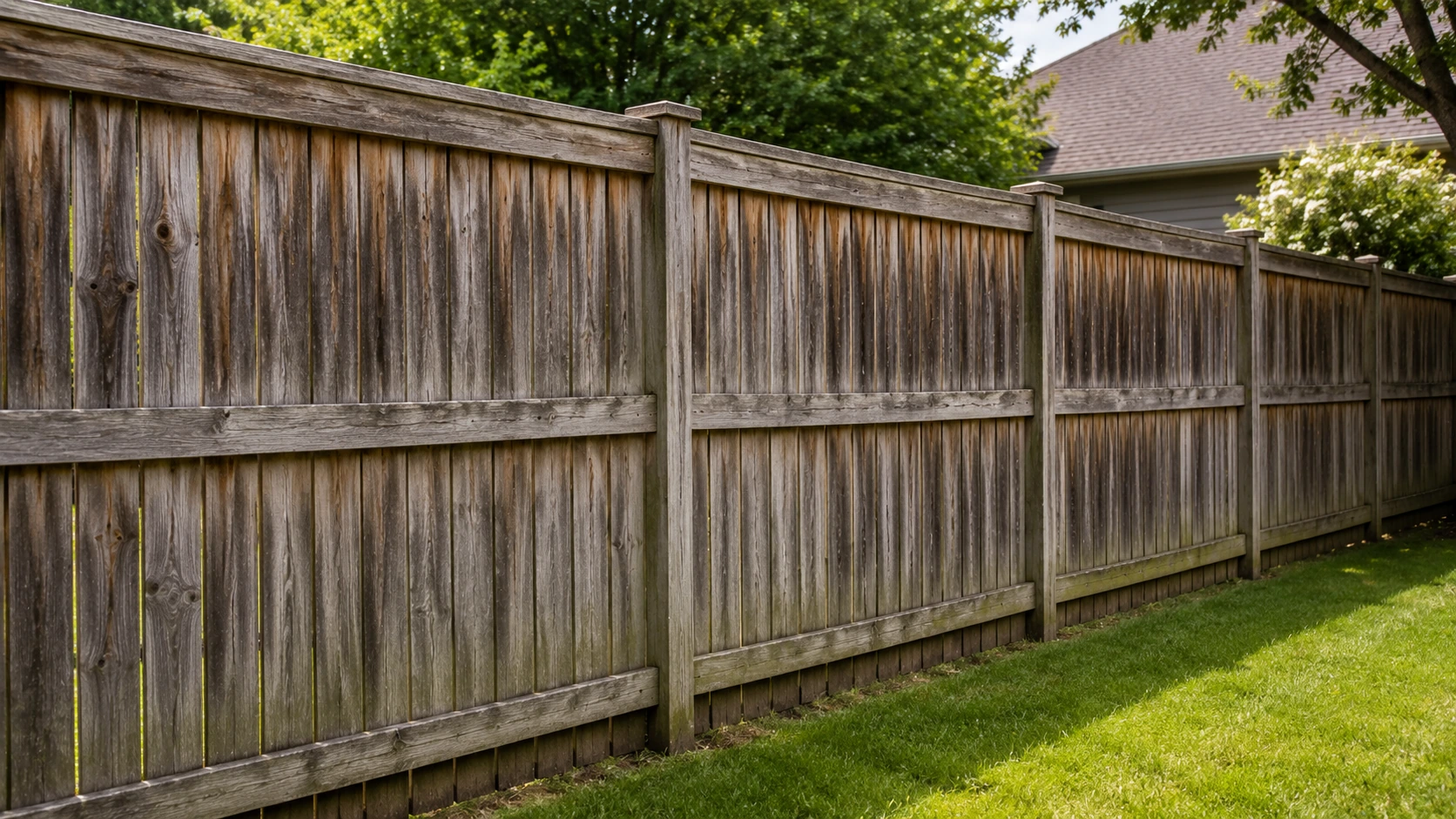
UV exposure can turn unprotected wood gray. Dirt and organic buildup can make the color look even darker or more uneven. Cleaning may reveal wood that is in better condition than it first appears.
Water Absorption
If water quickly darkens and absorbs into the wood rather than remaining on the surface, the fence may have limited remaining water repellency. A simple observation can help, but it should not be treated as the only test.
Peeling or Failed Coatings
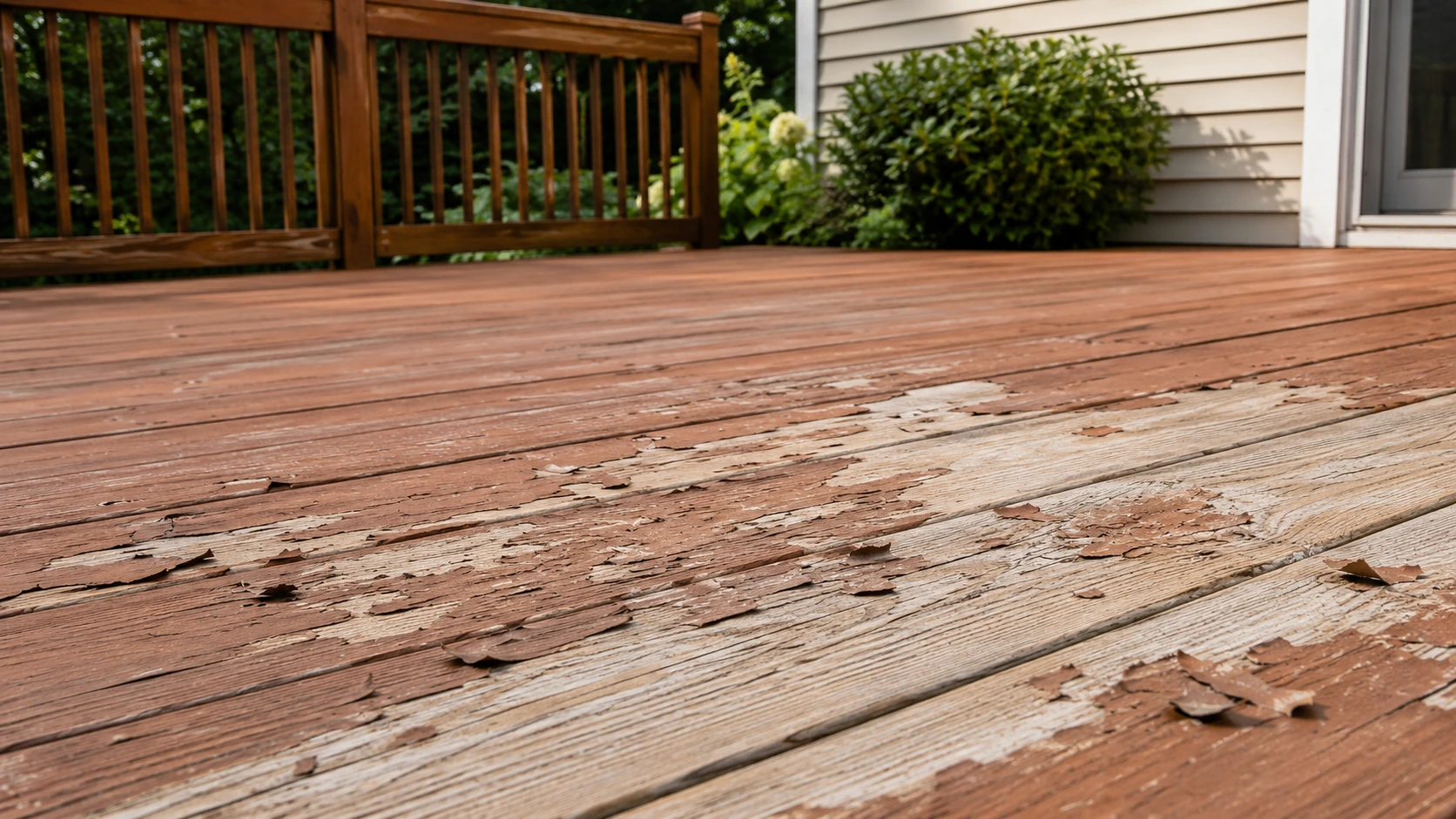
Solid or film-forming finishes can peel or flake as they weather. Applying another coat over loose material can repeat the failure. Scraping, washing, sanding, or a different finish plan may be needed.
Fence Orientation, Shade, and Vegetation
Vines, shrubs, sprinklers, and shaded areas can keep boards damp and reduce airflow. Sections near soil or mulch may weather differently from open panels.
Trimming vegetation and correcting repeated moisture exposure can help the finish perform more consistently.
Cleaning Before Restaining
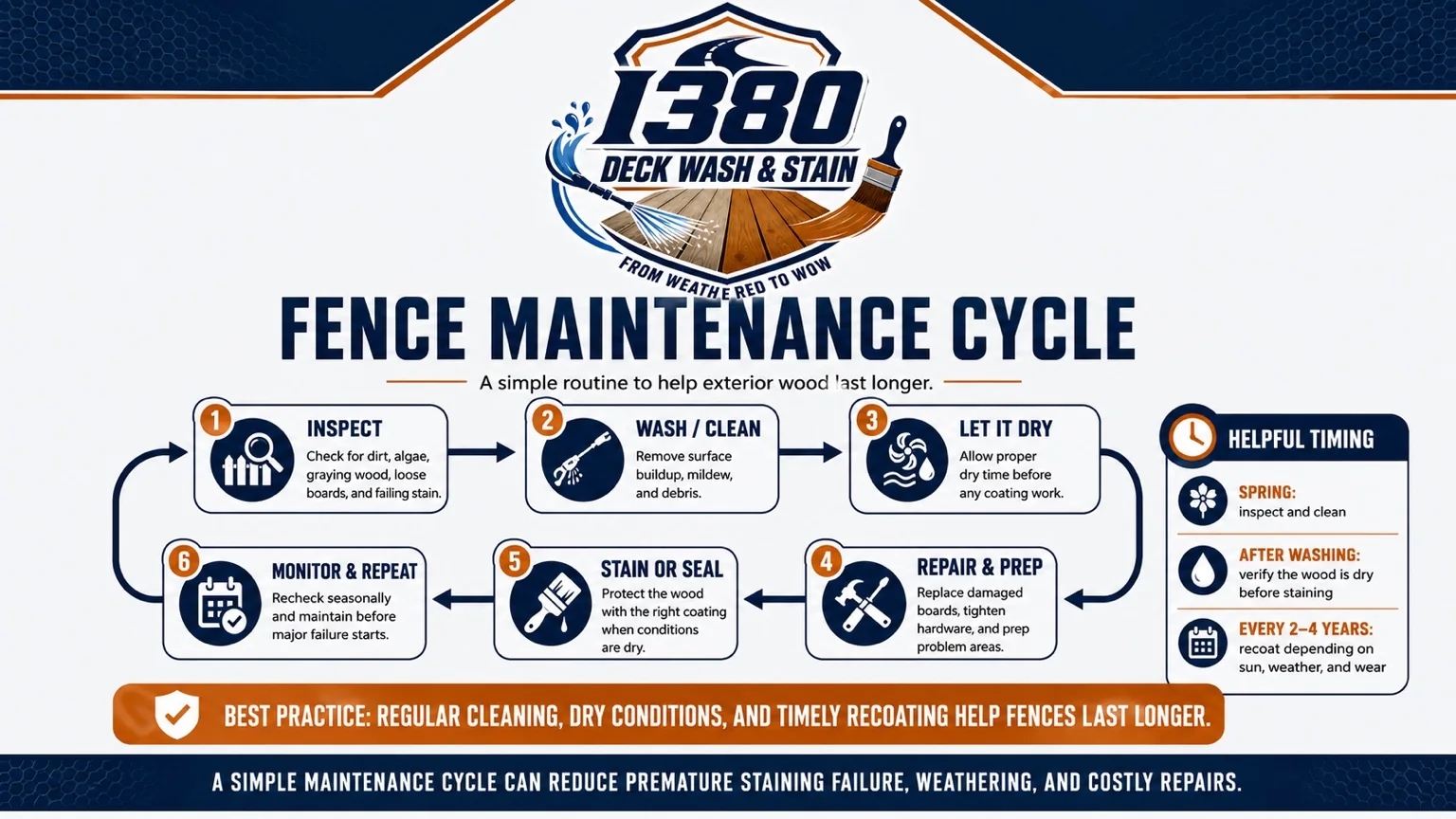
Fence stain should not be applied over dirt, organic buildup, loose coating, or wet wood. Cleaning reveals the actual condition and allows a better decision about sanding, coating removal, and dry time.
Our fence washing and staining service covers this complete process.
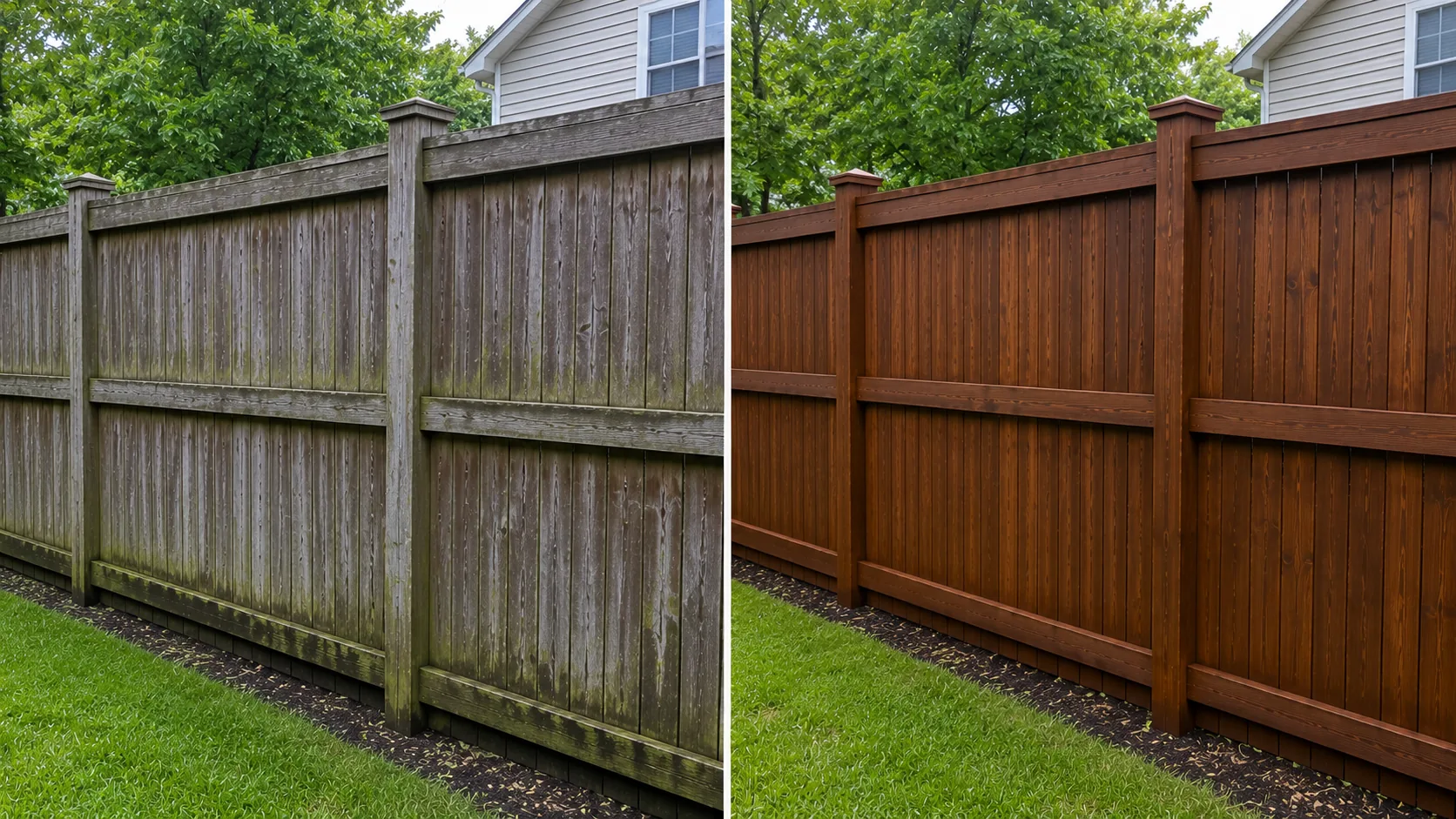
When Sanding or Coating Removal May Be Needed
Raised fibers, peeling edges, rough gates, and thick old coating can require more than washing. The amount of prep should match the condition and the realistic desired appearance.
Structural Damage Stain Cannot Fix
Rotten posts, loose rails, leaning sections, split boards, and failing gates need repair evaluation. Stain can protect and improve sound wood, but it cannot restore structural strength.
When Should a Wood Fence Be Restained? FAQ
How many years should fence stain last?
There is no single interval. Sun, moisture, shade, wood condition, previous finish, and application quality all affect maintenance timing.
Can I restain a fence without washing it?
The fence should be clean, dry, and stable. Dirt, organic buildup, and loose coating can interfere with the new finish.
Does gray wood mean the fence needs replacement?
Not necessarily. Graying can be surface weathering, but the boards and posts should be checked for rot, movement, and structural damage.
Can peeling fence stain be coated over?
Loose or failing coating should be evaluated and prepared first. A new coat over unstable material may peel with it.