Why One Schedule Does Not Fit Every Driveway
A sunny driveway with good drainage has different maintenance needs from a shaded driveway beneath trees. Traffic, nearby soil, lawn clippings, snow removal, and water flow all influence how quickly the concrete looks dirty.
Cleaning should respond to actual conditions rather than an automatic sales interval.
Shade and Moisture
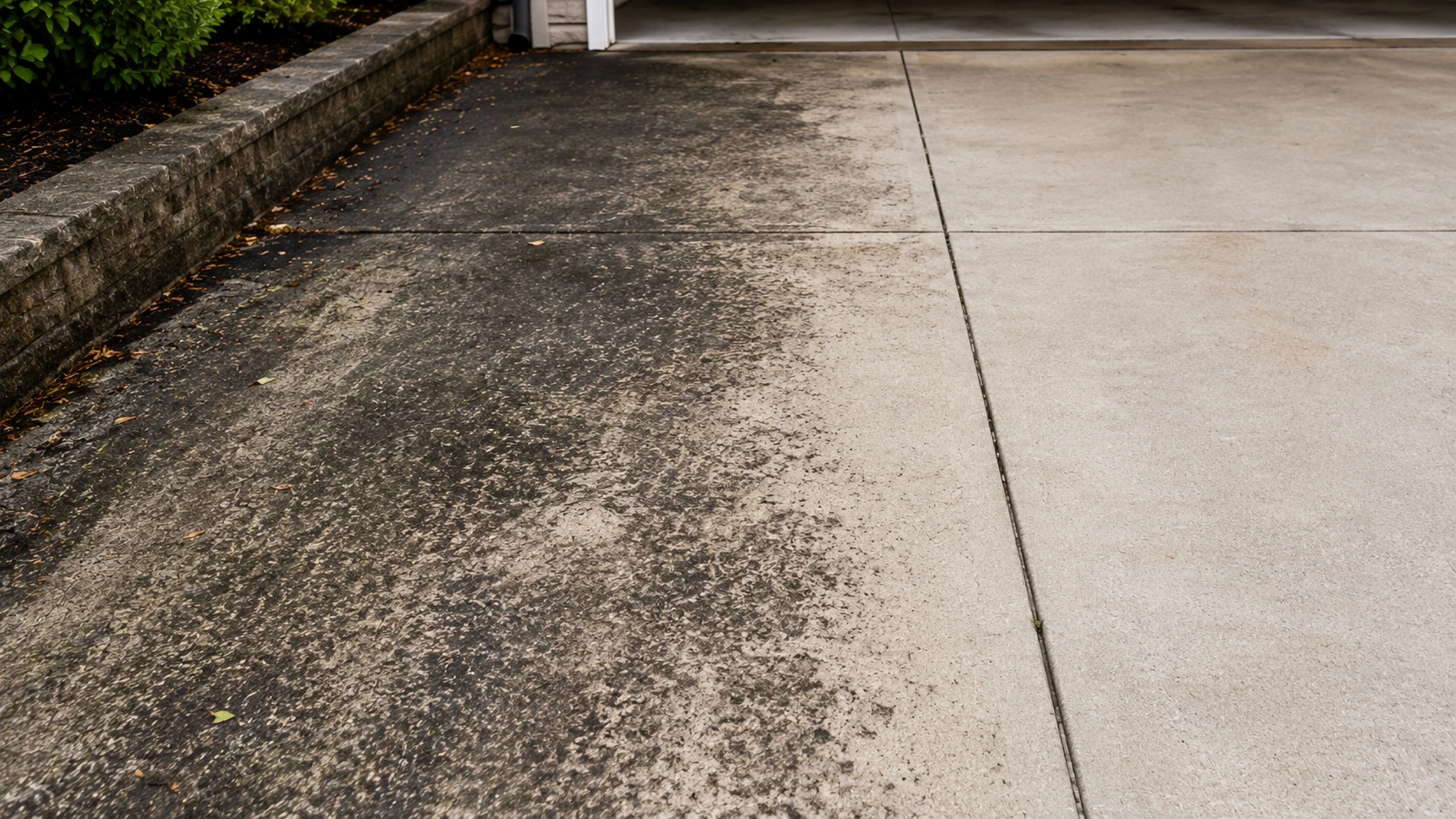
Shaded concrete dries more slowly and can support dark organic buildup. Areas near downspouts, retaining walls, landscaping, or low drainage points may change faster than the center of the driveway.
Vehicle and Foot Traffic
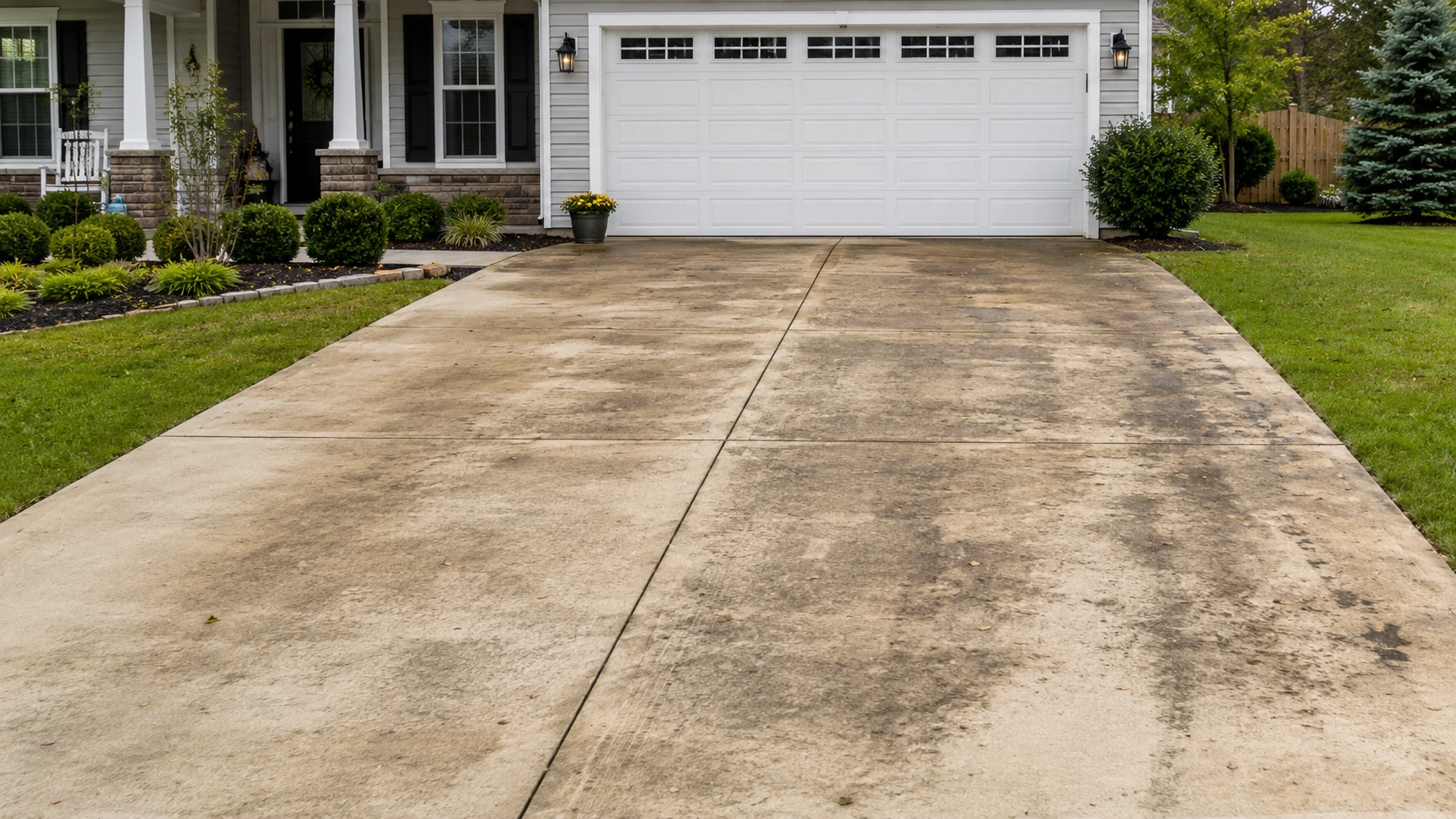
Tire marks, road film, soil, and repeated traffic can create visible lanes. Some marks are removable surface contamination; others may be embedded or permanent.
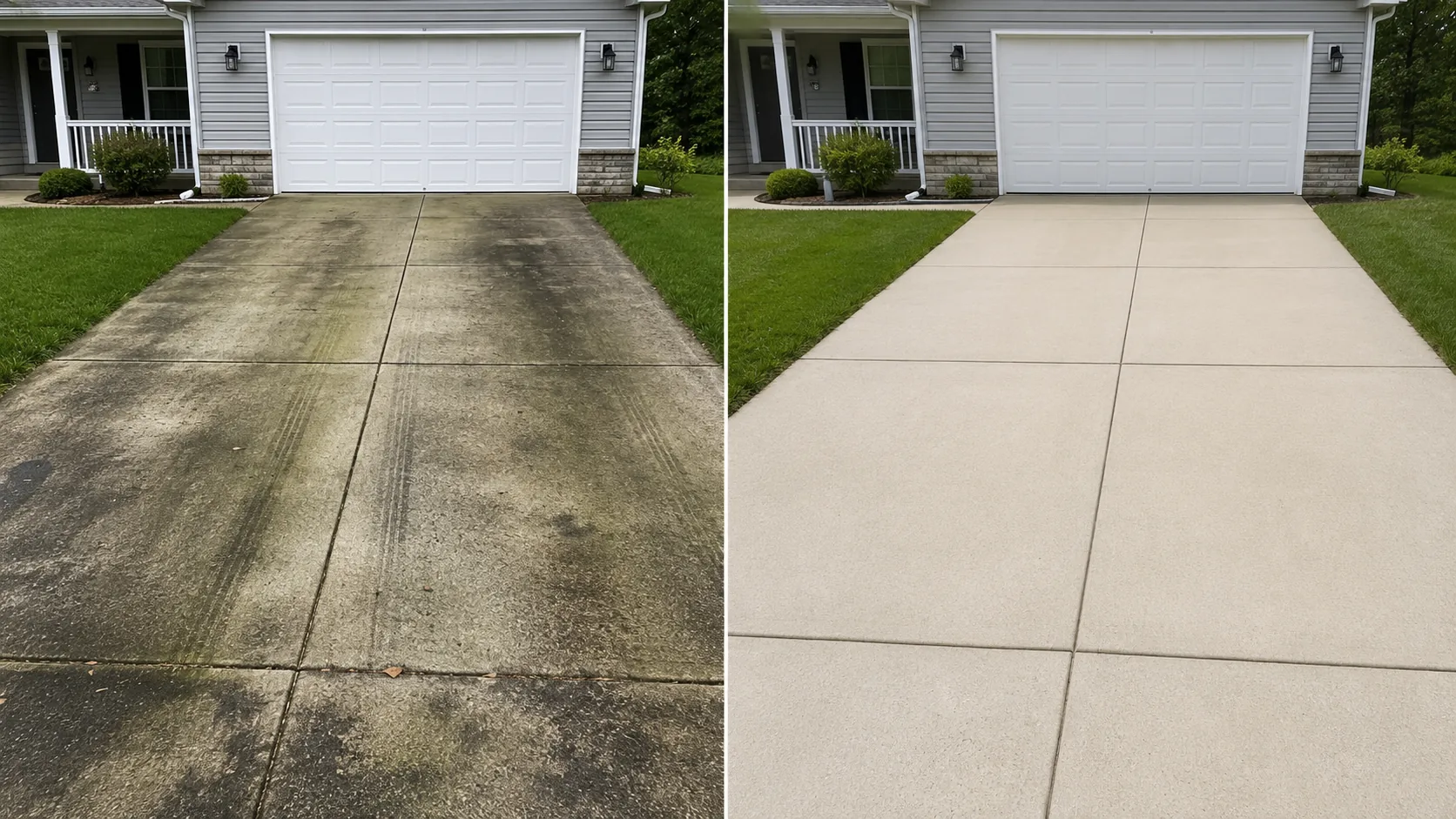
Cleaning can improve the overall appearance without guaranteeing that every spot will disappear.
Leaves, Dirt, and Seasonal Buildup
Leaves, pollen, mud, grass clippings, and winter residue can collect along edges and low areas. Periodic sweeping and rinsing can slow accumulation between deeper cleanings.
Signs It May Be Time to Clean
Visible conditions are the most useful trigger.
- Dark traffic lanes or edge buildup
- Green or black organic discoloration
- Mud and debris that no longer rinse away easily
- A noticeably different appearance from adjoining sidewalks
- Pre-listing, rental turnover, or an upcoming outdoor event
Property Use and Presentation
A homeowner preparing to sell may clean sooner than someone focused only on basic maintenance. Rental turnover, property management, and curb-appeal goals can also affect timing.
The cleaning decision should still account for the condition and age of the concrete.
Permanent Stains and Surface Wear
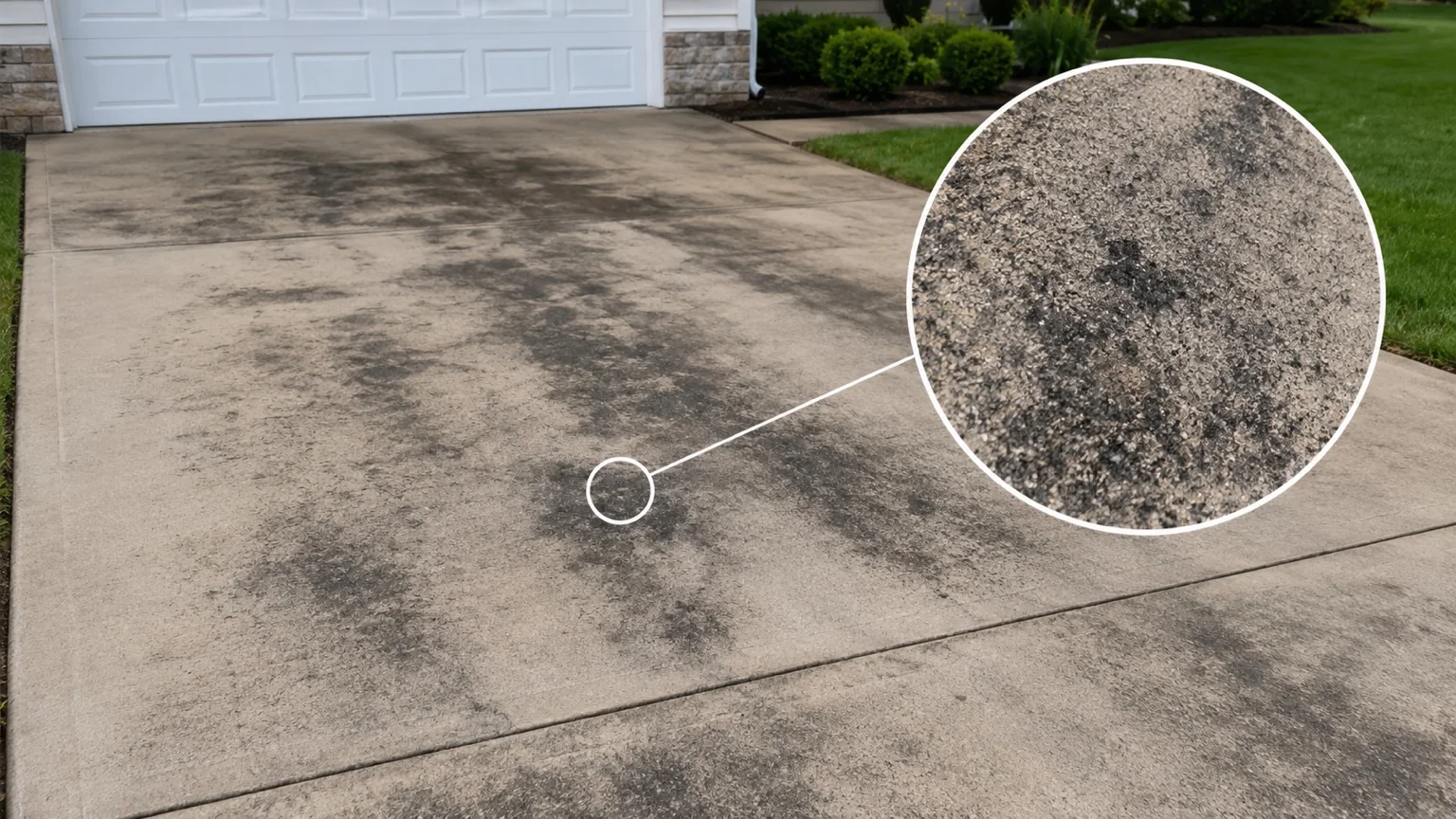
Oil, rust, tire rubber, paint, mineral deposits, and deeply embedded discoloration may not respond like ordinary dirt. Surface wear, scaling, cracks, and previous damage can remain visible after cleaning.
Maintenance Between Professional Cleanings
Keep leaves and soil from accumulating, address drainage concerns, avoid allowing lawn debris to remain wet on the surface, and clean fresh spills using a method appropriate for the substance and concrete condition.
When to Request an Estimate
If the driveway has broad discoloration or buildup that routine maintenance does not improve, review driveway and patio cleaning. The pressure washing hub can help compare related exterior surfaces.
How Often Should You Clean a Driveway? FAQ
Should a driveway be pressure washed every year?
Not necessarily. Cleaning frequency depends on shade, moisture, traffic, buildup, concrete condition, and appearance goals.
Can driveway cleaning remove all tire marks?
Some surface marks may improve, but deeply embedded rubber, oil, or permanent discoloration can remain.
Does shade make a driveway need cleaning more often?
It can. Shaded areas often dry slowly and may collect more organic buildup than sunny, well-drained concrete.
Is old concrete safe to pressure wash?
Older or damaged concrete should be evaluated first. Excessive pressure can expose or worsen weak, scaling, or deteriorated areas.