Why There Is No Universal Drying Time
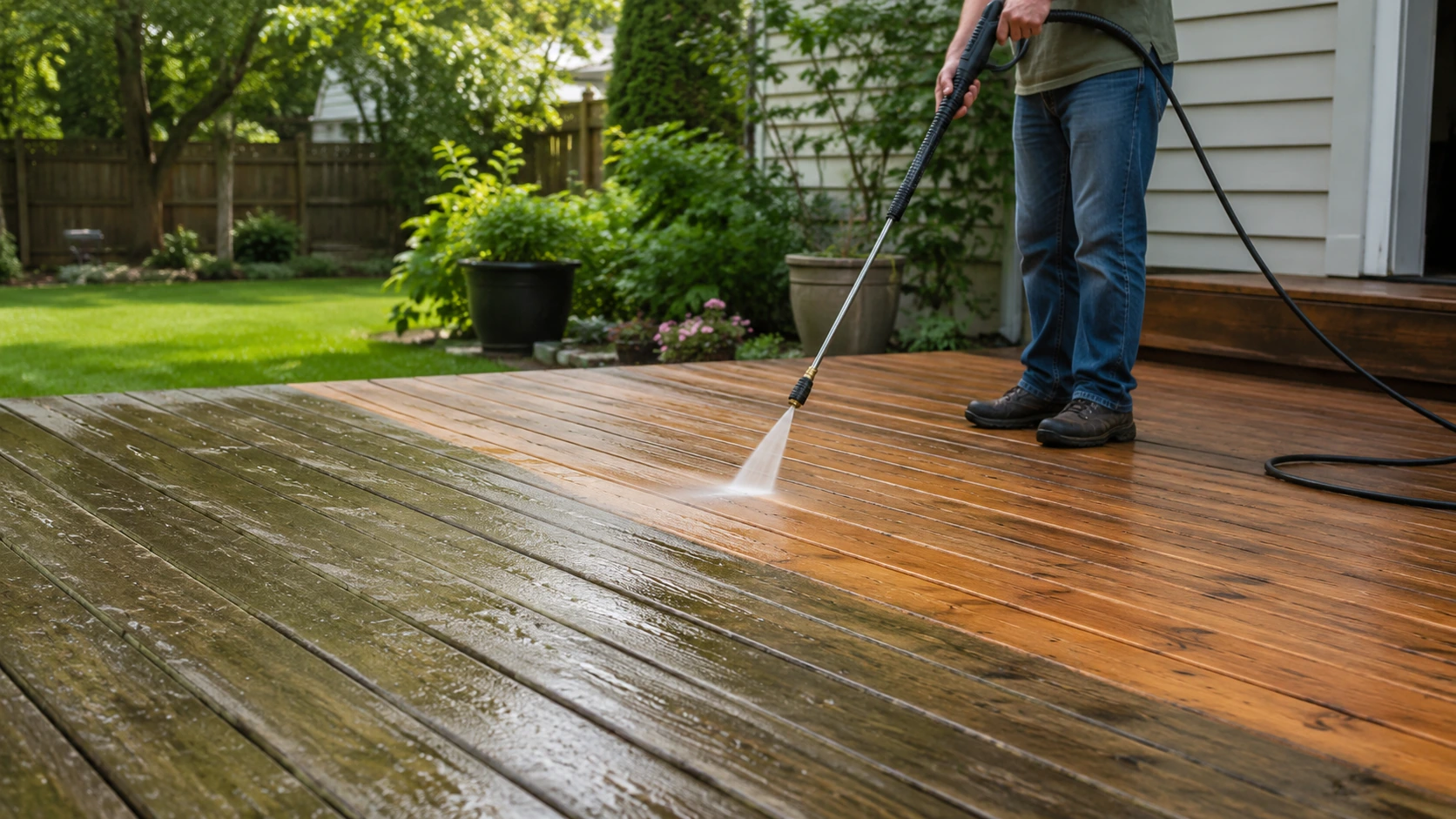
A sunny, open deck may dry much differently from a shaded deck surrounded by trees. Humidity, overnight dew, board spacing, airflow beneath the deck, and recent rain all affect how quickly moisture leaves the wood.
Product instructions also matter. Different finishes can have different moisture and weather requirements, so the manufacturer guidance for the selected product should be followed.
Weather and Humidity
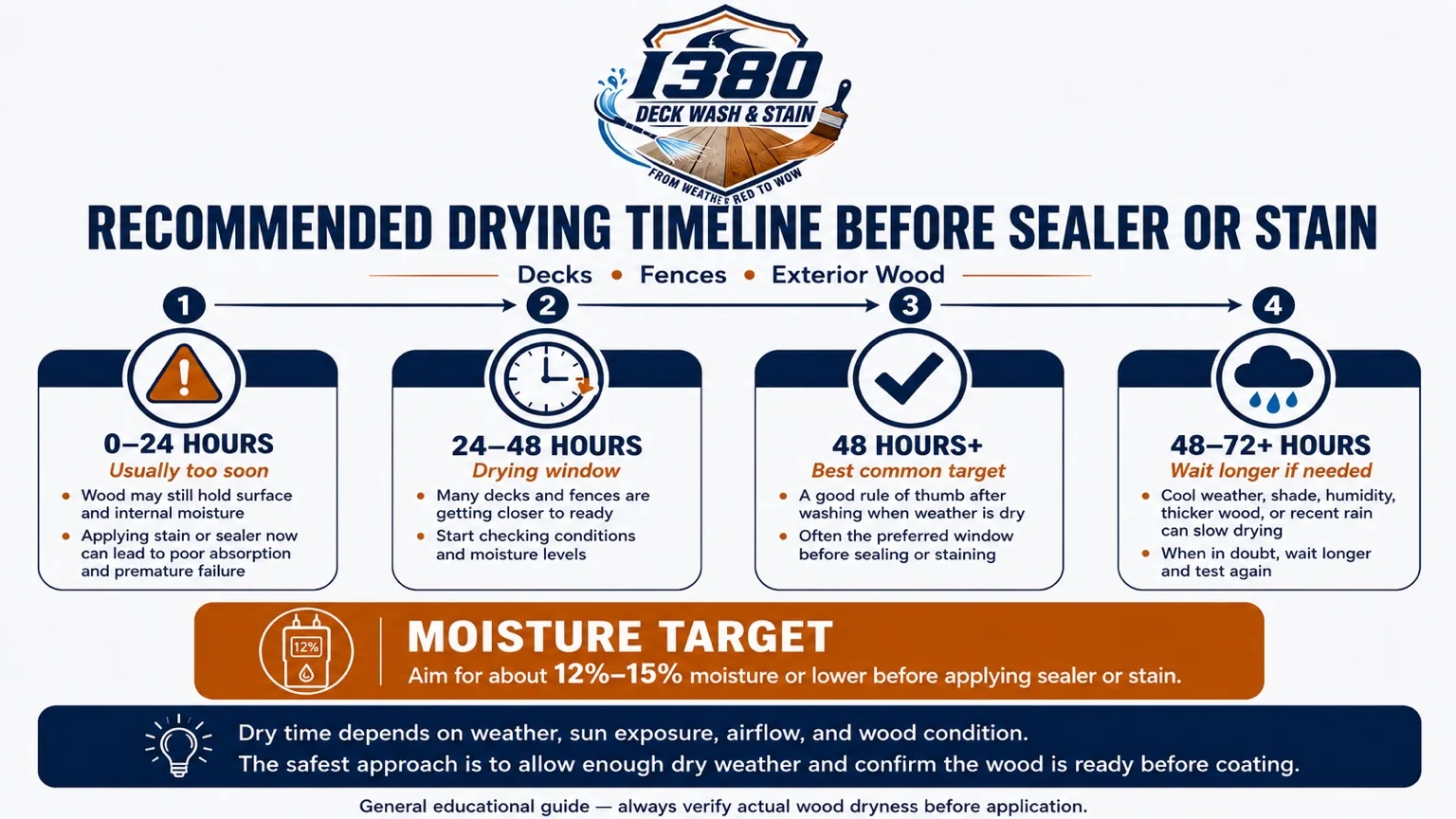
Warm air and sunlight can support drying, while high humidity slows evaporation. A dry afternoon does not erase a humid night, morning dew, or rain that soaked the boards the day before.
The forecast should provide enough stable time for the deck to dry and for the finish to be applied and cure within its requirements.
Sun Exposure and Shade
South- and west-facing areas may dry faster than shaded boards under railings, furniture, trees, or roof overhangs. One section can look ready while another still holds moisture.
That difference is why the entire work area—not only the sunniest board—should be evaluated.
Airflow Around and Beneath the Deck
Open elevated decks often have more airflow than low decks close to the ground. Vegetation, skirting, stored items, and enclosed framing can reduce movement of air beneath the boards and extend drying time.
Wood Age, Species, and Condition
Dense wood, weathered fibers, deep checks, board ends, and areas with previous coating can absorb and release water differently. Recently washed end grain and cracks may remain damp after the broad face of the board appears dry.
Why a Dry-Looking Surface Can Be Misleading
Surface water may disappear while moisture remains deeper in the board. Applying stain too early can affect penetration, adhesion, curing, color uniformity, or long-term performance.
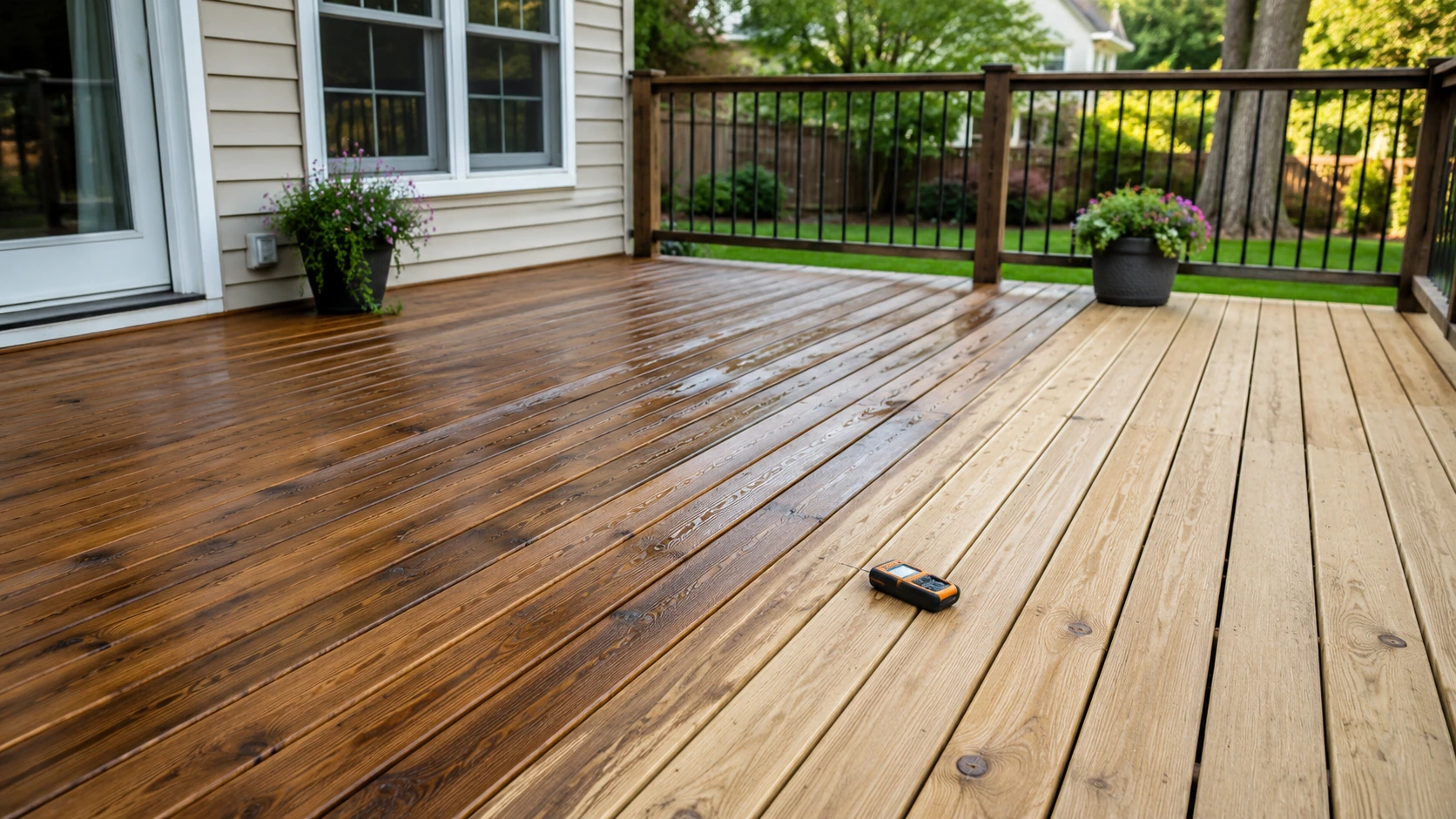
A moisture meter can provide additional information when used correctly and interpreted alongside product guidance and site conditions.

Risks of Staining Damp Wood
Stain applied before the wood is ready may absorb unevenly, remain tacky, dry inconsistently, or fail earlier. Film-forming finishes may be especially sensitive to moisture beneath the coating.
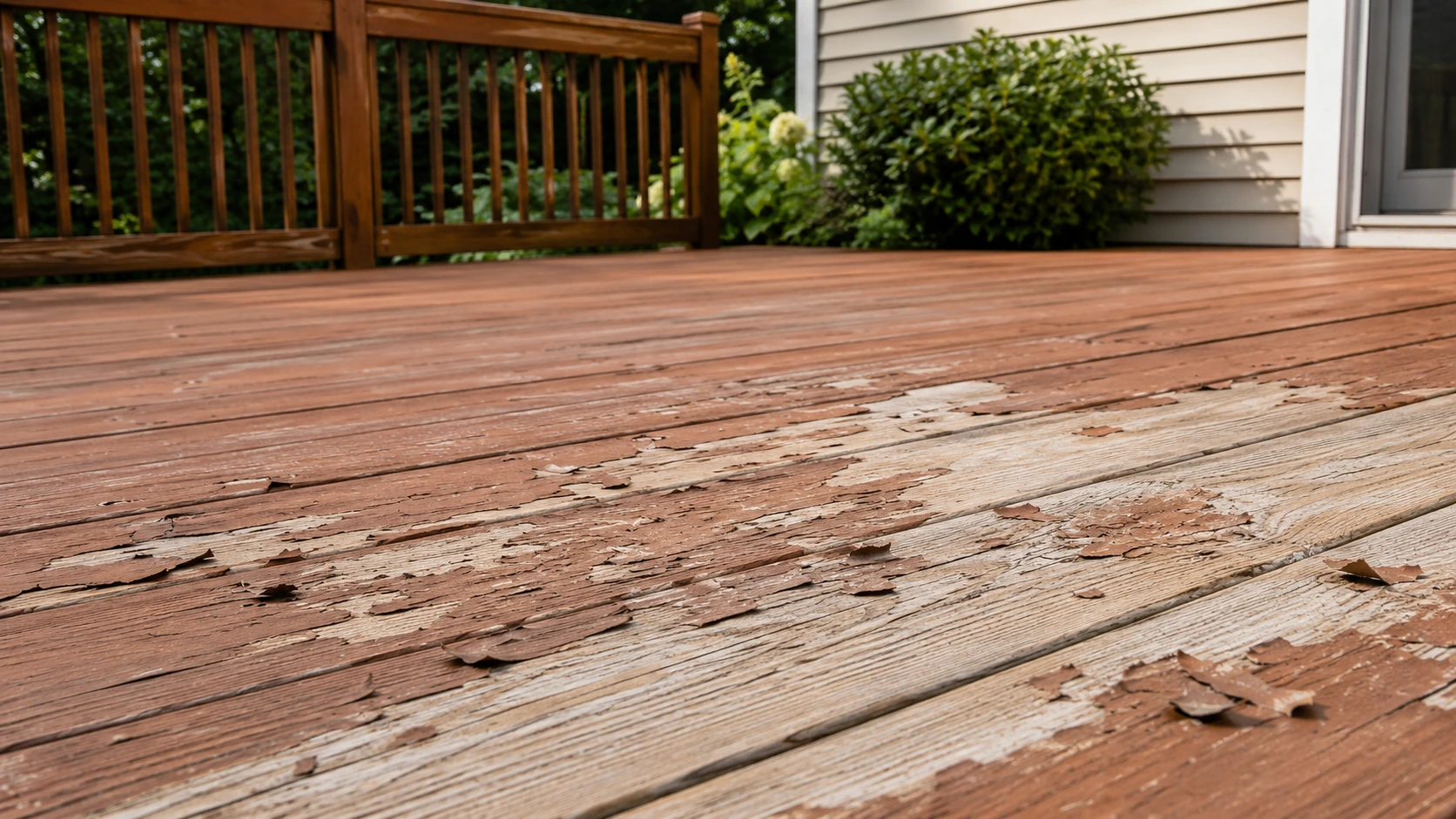
If the deck has a history of peeling, rushing dry time can repeat the conditions described in why deck stain peels.
What If Rain Interrupts the Process?
Rain can reset part of the drying window. The amount of additional time depends on how much rain fell, how deeply the wood absorbed it, and the conditions afterward. Covering a deck can also trap moisture if airflow is restricted.
The safer approach is to reassess the wood rather than assume the original schedule still applies.
A Practical Readiness Checklist
Before staining, confirm that the deck is clean, dry, stable, and prepared for the selected finish.
- No recent rain or washing has left the boards damp.
- Shaded areas, cracks, rails, and steps have been checked—not only sunny boards.
- The weather window meets the stain manufacturer’s requirements.
- Loose coating and raised fibers have been addressed.
- The wood condition supports the chosen stain or sealer.
How Long Should a Deck Dry Before Staining? FAQ
Is 24 hours enough for a deck to dry before staining?
Sometimes conditions may allow rapid drying, but 24 hours is not a universal rule. Humidity, shade, airflow, rain, and wood condition should be considered.
Can I stain a deck if it feels dry?
Touch alone may not reveal moisture deeper in the boards. Evaluate shaded areas, board ends, cracks, weather conditions, and product requirements.
Does a moisture meter guarantee the deck is ready?
No single reading guarantees readiness. A meter is one tool and should be used with product instructions, weather conditions, and an inspection of the full deck.
What happens if it rains after the deck was washed?
The deck should be allowed to dry again. The added time depends on rainfall, absorption, shade, humidity, and airflow.